YAKIMA BASIN, Wash. – Researchers at the University of Washington published a study that shows that Indigenous-informed tree thinning efforts in the Cascades didn’t just help with wildfire control—it also increased snowpack in the winter from 16% to 30%. With climate change impacting both snow fall and wildfire seasons, this study shows that efforts to restore forest resilience can help with managing water and fire.
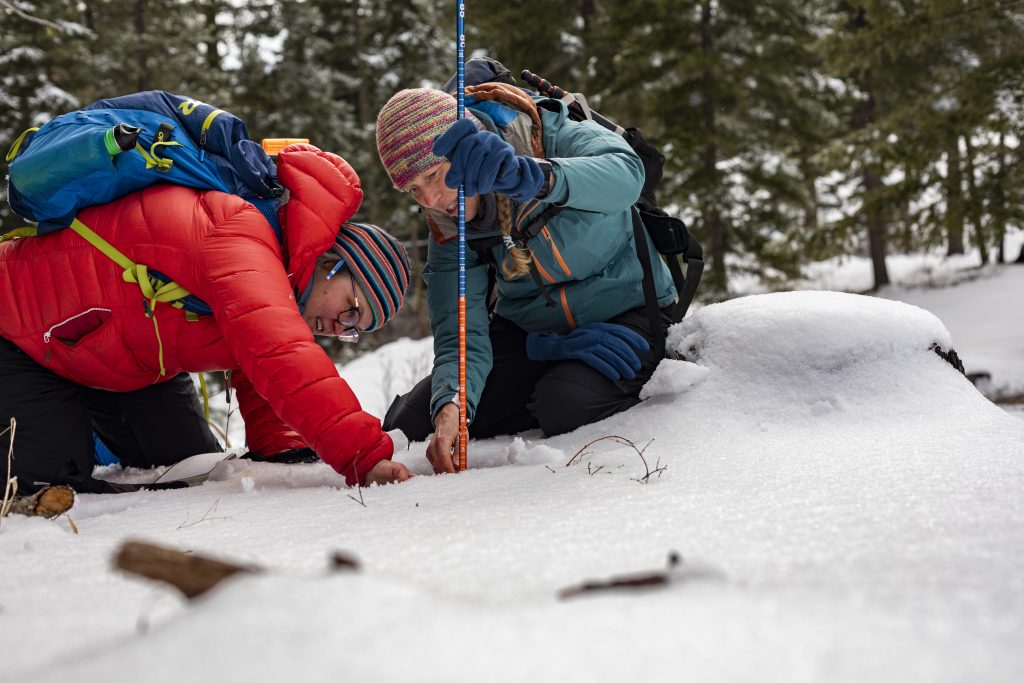
Dr. Emily Howe, a senior aquatic ecologist at the Nature Conservancy in Washington, spoke to the Tribune about how the study came about. The Yakima Basin is an extremely drought vulnerable area in Washington, but is also a key agricultural area. The snowmelt in the spring helps retain moisture in forests, which reduces wildfire risk, as well as drives the rivers in the area. “Rivers in the Cascades are 75% dependent on water that comes from the snowmelt,” said Howe.
Forest thinning has been one of the methods that Washington land managers use to help make more fire-resilient forests. However, the impacts that thinning had on snow and water wasn’t clear. “We didn’t want to be exacerbating the effects of climate change. Before this study, the observational data for the region wasn’t there, so that’s why this research was so important,” Howe said.
Phil Rigdon, Superintendent of Yakama Nation’s Natural Resources Department, was one of the members of the Tapash Sustainable Forest Collective who helped inform the study. He suggested that they measure across different densities of work—which would help inform foresters on potential best practices.
“How do we get our snow people and our forest people talking to each other, in a way that’s productive for forest and water management together?” asked Howe. “This paper was trying to crosswalk between the metrics that matter for snow and the way foresters measure and put their prescriptions on the ground.”
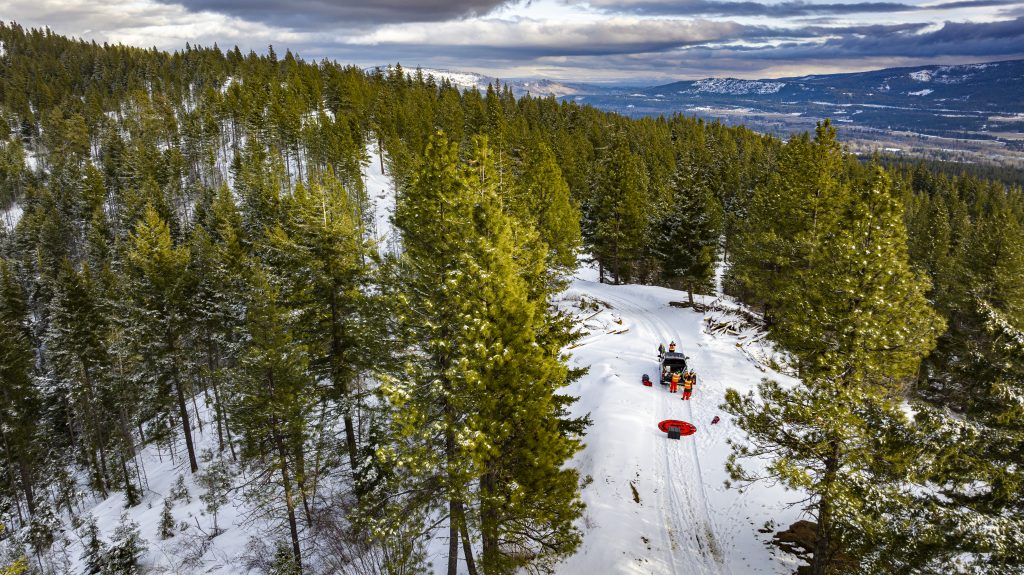
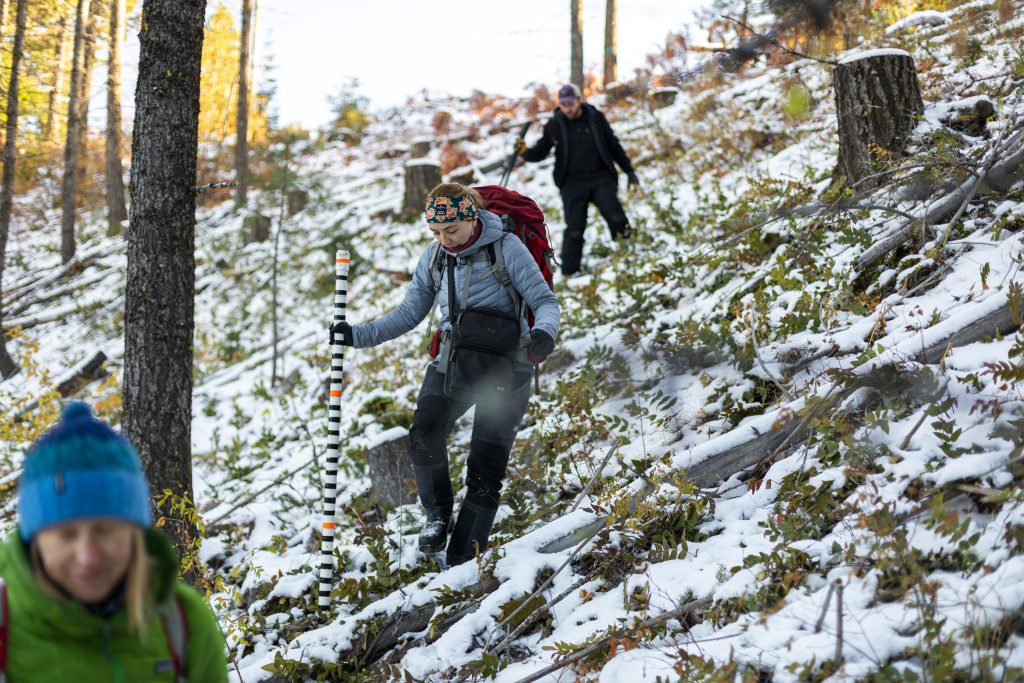
The study was able to compare pre-treatment forests to treatments that happened between 2021 to 2023, using experimental thinning inspired by ancient fire-adapted forests. Lidar and on-the-ground monitoring through time-lapse photography and SNOTEL sites showed that thinning led to a 30% increase of snowpack on north-facing slopes and 16% on south-facing slopes.
“The relationship between forest cover and snow can be very different across forests,” said Howe. “Sometimes, tree cover may protect the snow, while other times, trees with dense canopies can prevent the snowpack from building.”
In this case, small to mid-sized gaps in the canopy (about 4 to 16 meters across) were the sweet spot to helping snowpack build. “These treatments recovered an equivalent to roughly 15 Olympic swimming pools per square kilometer, compared about six swimming pools per square kilometer, on south-facing slopes,” said Lumbrazo. Rather than clear cutting, these thinning techniques were best within the natural variation of historic forest patterns.
The difference between north and south facing slopes likely had to do with the sunlight received. “On north-facing slopes in this part of the Eastern Cascades, forest structure strongly controls how much snow reaches the ground, because tree canopies intercept snowfall, and small gaps allow more snow to accumulate where sunlight is limited,” observed Lumbrazo. “On south-facing slopes, where snowpacks are shallower and receive more sunlight, solar radiation and ground vegetation seem to play a larger role in how quickly snow melts.”
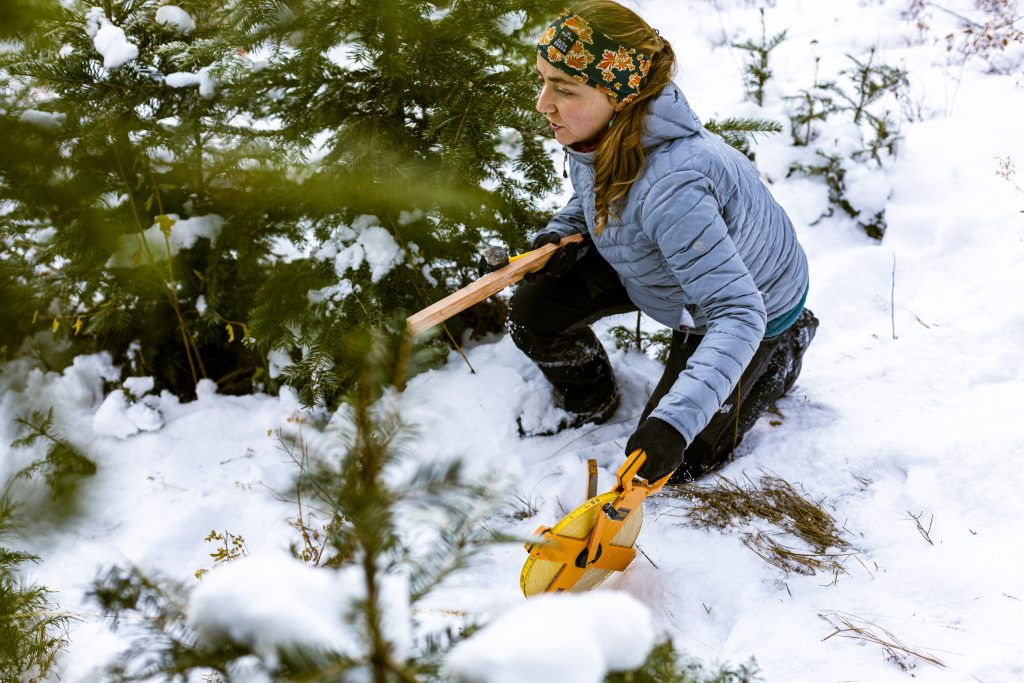
Howe said that the study’s limitations came from not having as much data and observations. For example, while California has monthly lidar flights that help compare data, Washington doesn’t have them nearly as often. “It would be great to capture data in snow drought years like this one,” said Howe, as the current snowpack is at 40% of its expected average. “We could definitely get more nuance in the data through large-scale monitoring as well.”
She added that climate change makes systems more volatile, so it’s difficult to get a clear pattern of what exactly is happening.
Still, this study shows that hydrologic needs aren’t in conflict with wildfire needs for land management. “It proves we can really roll back some of the fingerprints of climate change and modern anthropogenic effects on the landscape,” said Howe. “We aren’t having to make trade-off calls between our fire and water needs.”
The researchers were interested in future studies looking at different forest types and the effect of heat. They also suggested that Cle Elum Ridge, where the study took place, shares forest and climate characteristics with mid-elevation managed forests across the west—including Tahoe’s forests.
Howe said there were plenty of similarities between Tahoe and the Cascades. “In these warmer maritime climate areas and lower elevations, opening up gaps in the forest canopy could get rid of the umbrella effect of trees, which can intercept up to 80% of the snow.”
She went on to say that returning to the structure of old-growth forests could help build up a deeper snowpack, as the canopy gaps and larger trees would help shade the snow, potentially making it last up to a month longer.
And there are downstream effects (pun intended) to how forest management helps with water. Here in the Sierra Nevada, the rivers, lakes and springs supply water to two-thirds of California’s population, making snowpack and snow melt extremely important.
Howe says that those effects are important for animals as well. “The timing of snowmelt impacts animals like fish, who rely on a big burst of cold water for their life cycles. It’s literally in their genetic code and drives their probability of survival.”
Not only that, but the spring melt also impacts the flow of water for rivers, floodplains and natural aquifers. Down in the Sacramento Delta, that big pulse of water can impact salinity and freshness of water. “We’re interested in seeing how our forest management impacts the pulsing of these river ecosystems that live and breathe by the pulsing of the flows. You need all those ecological processes and exchanges across banks and floodplains for the system to thrive.”
While Howe is excited about the results of the study, she said, “Predicting snow and forest relationships is tricky. We can’t put this message somewhere else and expect it to work without working with each landscape and understanding the relationships there. We need to do the testing and legwork in each region to tend the lands in the best way possible.”
Howe acknowledges that some of the impacts might sound small, but there’s no silver bullet. “We may not need to look for those big numbers in one solution. Instead, we can be looking at all these different techniques that stack up to big numbers.”
But she felt optimistic about partnerships like those with the Tapash Sustainable Forest Collaborative—and those in the Tahoe Basin. “Tahoe has just been a powerhouse region for pumping out good, interesting ideas: from snow to forest to pollution research.”
Howe said, “Tahoe is a place that shows people working together to solve huge, seemingly untouchable problems. Between them and the Yakima Basin, they’re two places with these wicked challenges where people have really stepped up, and that is pretty heartening.”