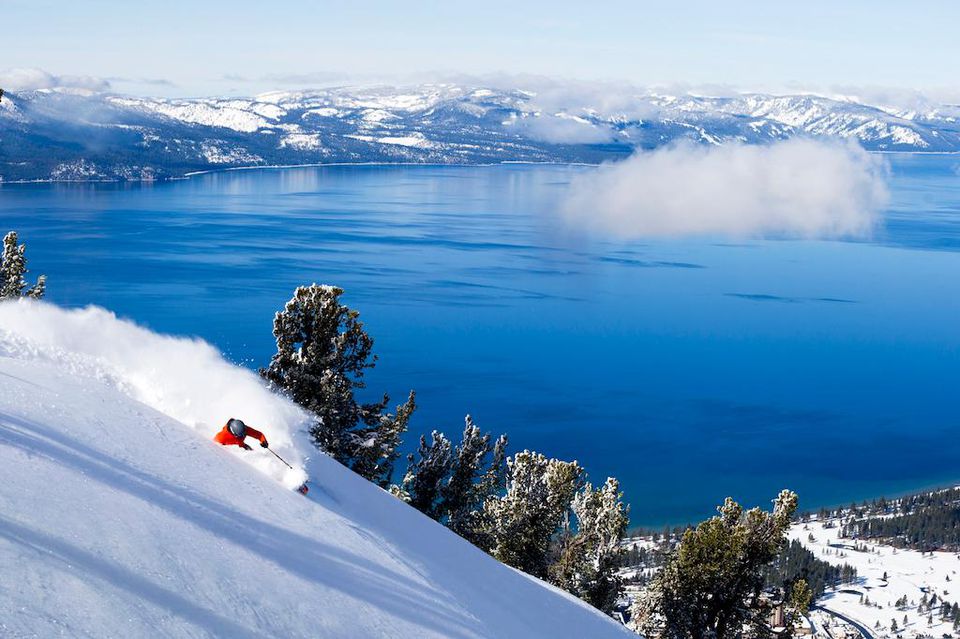

LAKE TAHOE, Calif./Nev. – Lake Tahoe sets the stage for world-class hiking and sightseeing. With hundreds of miles of trails ranging from hidden alpine lakes to cascading waterfalls, there’s an endless array of terrain to explore. Though it might prove enticing to find new angles to admire a view, the road less traveled in Tahoe is rarely, if not ever, the best one.
From environmental impacts to human safety, there are a number of reasons why staying on trails is recommended.
Preserving Tahoe’s natural beauty
As tough as Tahoe’s terrain seems, with its decomposed granite soils and towering glacial-carved walls, the Sierra Nevada ecosystem is quite fragile.
The moment you step foot off a trail, you risk crushing protective topsoil, allowing it to be eroded by heavy rainfall and wind. That loose soil turns into microscopic sediment.
“Though it’s tempting to blaze your own trail, new social trails lead to erosion in the form of fine sediment particles that eventually flow into Tahoe’s creeks and streams and Lake Tahoe,” says Marilee Movius, Sustainable Recreation Manager at Keep Tahoe Blue, an organization whose mission is centered around protecting and restoring the environmental health, sustainability and scenic beauty of the Lake Tahoe Basin. “These particles are one of the leading causes of Tahoe’s clarity loss and challenges.”
So what is a social trail? For those unfamiliar, social trails are considered unofficial or unmaintained pathways carved by repeated human foot traffic.
Social trails not only pose risks of erosion, but they can also produce litter impacts.
“The farther you get off trail, the more likely it is for anything you accidentally leave behind, whether it be litter or pet waste, to be left out there in the environment. This is because the closer you are to an established trail, the more chances there are for other good stewards of the environment to pick up what you may have missed,” says Movius.
To prevent the possibility of littering, Movius and those at Keep Tahoe Blue recommend bringing reusable water bottles, utensils, and pet waste bags.
What’s more, staying on trails will avoid the risk of trampling precious vegetation as foot traffic can damage delicate flora and root systems in the environment.
Better safe than sorry
Even the most confident locals have run into trouble trying to forge their own paths while out exploring the Sierra Nevadas.
From steep slopes and sudden drop-offs to raging waterfalls and slippery rocks, the dangers of going off trail can turn a beautiful day into an all-out nightmare.
Jamie Lefkowitz is Tahoe Technical Team Captain with El Dorado County Search and Rescue (EDSAR), and while her team’s extensive training is utilized during every search-and-rescue mission, trying to find people who don’t know what trail or which direction they veered off from hinders EDSAR’s ability to locate those in need of help.
“If you call us and say you’re on a trail, we can get to you pretty quick,” says Lefkowitz. “What complicates things is when people don’t know where they are – knowing where you are is important, being able to tell us your coordinates, or point on a map to a peak that you’re near. It’s always going to take longer if we have to hunt you down.”
When traversing unknown terrain, relying on cell service is also cause for concern, especially if injuries have occurred and time is of the essence. There are many dead zones with no reception throughout the basin, so having a back-up plan is always recommended.
When it comes to social trails, Lefkowitz urges those to keep their eyes out and heads up for official trail markings.
“Social trails are not built for the average hiker, and as much as people want to think they’re above average, most of us are average hikers,” Lefkowitz says. “You have no guarantee that this trail is going to go into terrain that you can handle, so you want to be really careful about following a beaten path and expecting that someone put it there for you.” Lefkowitz notes that even wildlife trails can be mistaken for social trails.
“The majority of our rescues of lost hikers are off-trail. It’s very, very rare that we have a truly lost hiker who needs help who is on a trail,” Lefkowitz adds.
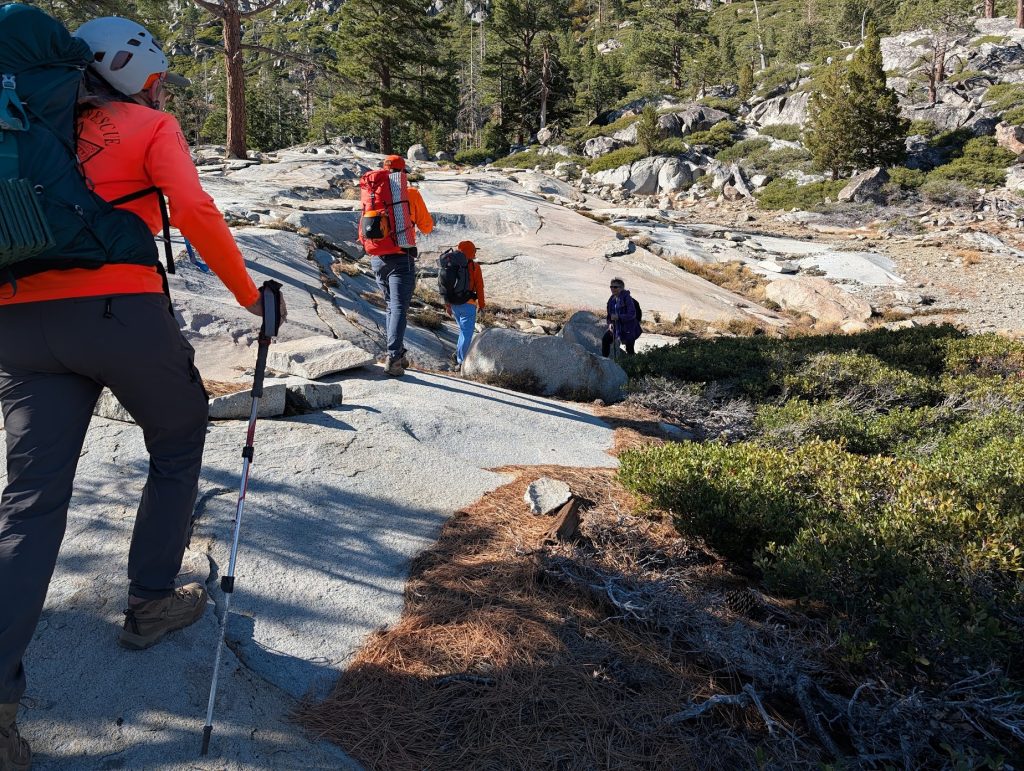
As snowmelt turns into powerful, fast-moving currents, the dangers of going off-trail near these bodies of water can lead to severe injury or if worse comes to worst, body recovery.
As mist settles on surrounding granite rocks near rivers, streams and waterfalls, what looks like a good place to step can actually be a slippery slope.
Places like Lower Eagle Falls which overlooks Emerald Bay is not only a tourist hotspot, but has been the location of several deaths of visitors who veered off trails near this beautiful yet unforgiving waterfall, including a 35-year-old woman in 2019, and a 25-year-old woman in 2023.
With icy-cold water temperatures and frequently-dropping climate temperatures in and around the basin, advice from Lefkowitz and EDSAR are to always be prepared.
“The most important thing is warm layers. We rescue a lot of people who are simply too cold and tired to continue because they didn’t anticipate how cold it gets when the sun goes down,” says Lefkowitz.
In addition to staying on trails for the sake of Tahoe’s ecosystem and your own safety, be sure to bring supplies to sustain yourself while out recreating in the Sierra Nevadas. Always keep track of where you are, where you’re going and what you’ll need in case of an emergency.
To learn more about Keep Tahoe Blue or to participate in any of their upcoming events, visit keeptahoeblue.org.
For information about El Dorado County Search and Rescue, visit edsar.org.