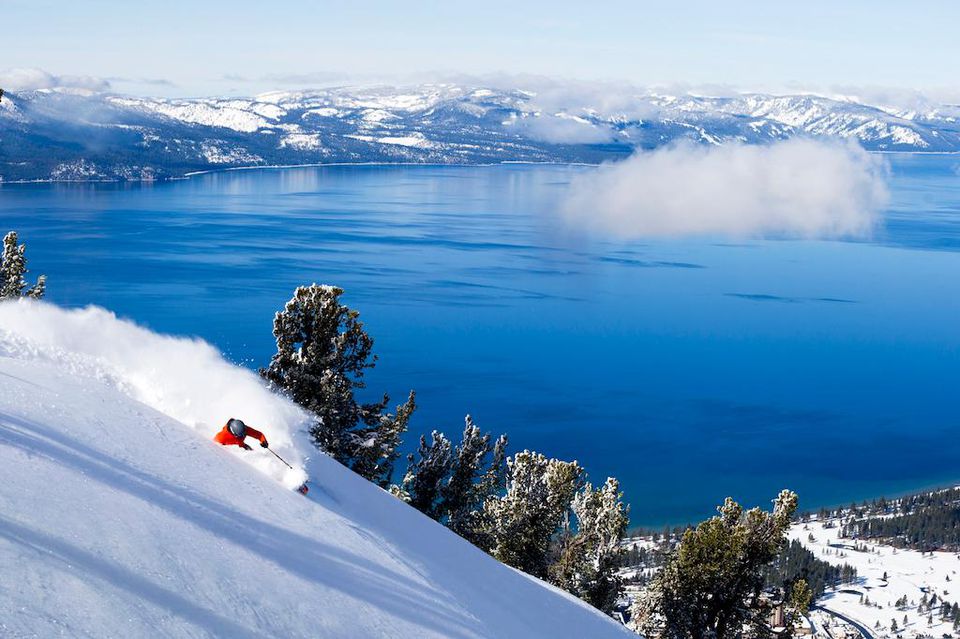
SOUTH LAKE TAHOE, Calif. – Firefighters are an integral part of keeping the Lake Tahoe Basin safe: from Cal Fire to the Lake Tahoe Basin Management Unit to the city firefighters. For local firefighters, their responsibilities have taken them all over the place, but Tahoe is ultimately their home, and one they all feel passionate about.
Christian Wooster
Once a firefighter in the Tahoe Basin and now a smokejumper, Wooster started his career after studying at UC Davis. “I kind of joined the Davis fire crew on a whim because a friend of mine was interested in it as a first job,” said Wooster. “But it kind of restored my faith in the power of random chance, because I love my job. I think it’s the best job in the world.”
Wooster originally studied philosophy and exercise biology, but jumped at the chance to work on a fire crew. “I enjoy human interaction and that tangible work—I could see what was physically happening where I worked and I really enjoy being outdoors.”
“It’s kind of a Peter Pan job,” joked Wooster. “You run around all day, and you never have to ‘grow up’ or promote out of the things you really enjoy doing.”
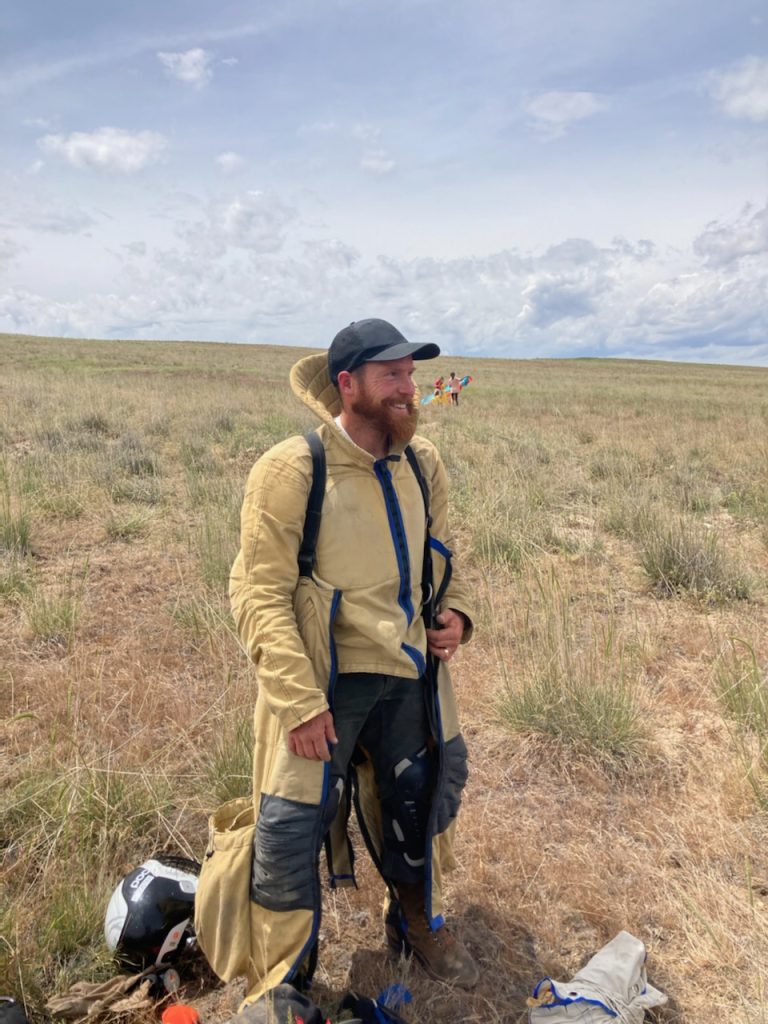
After working on a call crew for two years, Wooster eventually took a seasonal position with Tahoe Douglas as a wildland firefighter. “That was one of my most satisfying fire positions. There are areas I drive by, and I still see how the landscape is more resilient to fire after prescribed burns.”
Wooster prides himself on the ability to learn new skills through firefighting, something he feels is inherent to the career. “You can join knowing nothing because they’ll really train you. And there’s a constant pursuit of trying to hone your craft and bring excellence to everything you do.”
Even if you don’t have family in firefighting, there’s a generational lineage of people in the career that mentor you and have an impact on what you do. “My lineage was Black Mountain,” said Wooster. “There are legendary superintendents there like Craig Workman, Matt Hogarth and Matt Gill, who are all the type of people we try to be like. Even if they’re in the same standard framework of training, they develop their own little flavor, and you hope to keep those traditions and reputations of wherever you’re working going.”
Wooster says that some of his oldest friendships are people who he met on fire crews. “It helps that there’s a common goal, common hardships—shared experiences. And when you move on to another place, you wind up staying in touch in the strangest ways.”
One shared experience he recounted was working at Zephyr doing fuels reduction and burning piles. “I had my phone hanging from my neck, and all of a sudden I realized I didn’t have it anymore. I chirp on the radio, then we hear this huge BOOM—I’d dropped my phone into a pile,” he said. “I brought it to the AT&T store as a joke and asked if they could get my phone contacts off this molten hunk of phone magma. They probably didn’t think it was as funny as I did,” he laughed.
Wooster decided to settle down in Tahoe and worked on a Type I crew for USFS in Carson City. “It was my goal to work at a federal position for the challenge… and the health benefits.” Later, he began working on a hotshot crew, which he felt had more challenging or rigorous assignments.
“It felt like we always had a fire to go to. I once worked a really long shift—36 hours—and it made you think about the logistical challenges of getting food and fuel,” said Wooster. “For me, it was a moment of pride and our boss, who never complimented people lightly, made sure to tell us that was a really special shift. It’s one I definitely still remember.”
Bonding with crews in wildland firefighting comes from those long hours of work together. But there are also little traditions and superstitions that come with the territory.
“There’s a bunch of people who have quirks and superstitions about Big Ernie,” he said—referencing a mythical fire god that plenty of hotshot crews speak about. “Some people say if you stay up late, you’re tempting Big Ernie and it’ll guarantee you a fire. Monotonous work results in a lot of weirdness.”
Even the more mundane things have their quirks. Wooster recounted a story of people taking bets on who’d eat a particularly strange ration they’d received. “Someone funded a whole vacation through that. I mean, it was pretty gnarly food.”
As for his own traditions, Wooster said, “Maybe I’m still working on them. But I do take a small rock from every fire I’ve worked on, and I use those to decorate my fruit trees. I even have one from my first fire on a hotshot crew.”
Keeping memories of his experiences is something he says is important to him. “I wish I started doing it earlier. Looking back will bring all those memories that bring on feelings of accomplishment or camaraderie. Even if it’s a horrible fire, you’re just happy you made it through and you’ll be read to take a gamble on the next one.”
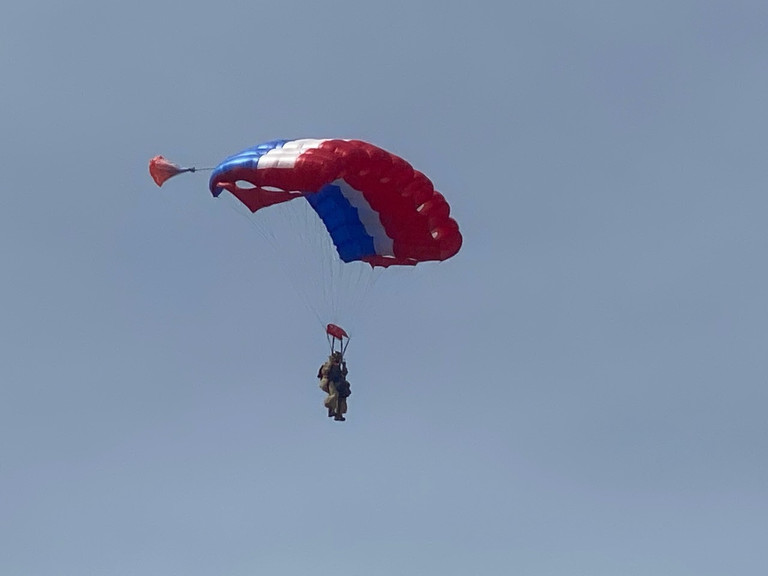
Now, Wooster’s job is anything but monotonous—he works with the Boise Hotshots as a smokejumper, meaning he parachutes out to get closer to fires. “It’s great learning to fly the parachute around, reading conditions and reacting to them. Being ‘dialed’ (a term for particularly astute crew members) is a new hill to climb.'”
“It pays to be a good student of fire, and I want to surround myself with people I want to be like,” said Wooster. “It’s not just about jumping out of planes. Some people are wizards at what they do, and I want to learn to be like them.”
Wooster says he loves how his career has given him the chance to keep learning new skills, working with his hands outdoors. “The American taxpayer pays us to be on and protect some of the most beautiful public lands. I have a lot of gratitude for being a federal firefighter and the support we get.”
To interested firefighters, he tells them to take any opportunity they can. “You gotta be able to pull your own weight, but there’s great people who will help you build expectations within your reach. Don’t be afraid of something that’s a challenge, because you never know where it’ll take you.”
John Duvoisin
Duvoisin serves as a fire captain with Cal Fire at Meyers—but at the beginning of his career, he wasn’t sure whether he might be a video game designer or a teacher. Now, he says, “I could have found happiness in any job I chose, but I’m lucky I chose fire. I can’t think of a bad day at work I’ve had over these 21 years.”
Originally, Duvoisin studied computer programming, but saw a chance to join the firefighter academy with a friend of his. “I played travel hockey growing up and seeing all the guys lined up in uniform, working together—there was a team appeal to me. Plus, the physical aspect was appealing to me because I was sitting a lot in class, where I wanted to be a video game designer.”
Having spent most of his life in California, he also felt excited about the opportunity to help with fire, a huge concern throughout the state. “When there’s smoke in the air, the public is leaving and we’re going in. There’s a high expectation that we’re going to show up and help solve the problem—and we are here to help people at the end of the day. It’s a lot more than a paycheck.”
But Duvoisin wasn’t quite sure that he wanted to make it his whole career. He met his wife at Chico State, where he was considering pivoting to becoming a science teacher. “I’ve always just enjoyed teaching, showing somebody something new and getting them more interested. I can see the effect a good teacher can have on someone.”
Nowadays, he scratches that itch, especially with fire crews that typically have 18-22 year olds. “I get to teach because I work with these young crews, where everything is brand new. And I teach science through training, like relative humidity, fire weather, wind, temperature and fuel.”
When he moved here in 2010, he was still working in Red Bluff, sometimes taking jobs around the area like in Carnelian Bay. “It’s a unique and popular area, and when Lake Tahoe is threatened by something, people pay attention because they form a connection here. Tahoe holds a special place in a lot of people’s hearts.”
Even his crews, who are usually from central or southern California, end up coming back to Tahoe. “We hike all over Lake Tahoe for our physical fitness, and while they complain the first time they hike up Gunbarrel—you can see and appreciate the effect you’ve had as a firefighter when you’re looking out at Tahoe from up there,” said Duvoisin. “They all come back to Tahoe. Not a lot of places get that reaction from people.”
As part of Cal Fire, Duvoisin says you often work outside of where you live. “There’s a worry for some, actually, working with the community you protect. It’s hard to be on calls with people you know. But for me, it feels good to know you’re directly helping your community.”
Before he worked in Tahoe, Duvoisin said he already loved the outdoors. “When I moved here, there wasn’t a Cal Fire hand crew in South Lake Tahoe. But I was always saying, ‘Man, I wish there was a job where I could hike around and be outside all day and get paid for it.’ And that’s what I do now.” He counts himself lucky that he was able to promote to a fire captain around the Mosquito Fire and could work on the community he lives in.
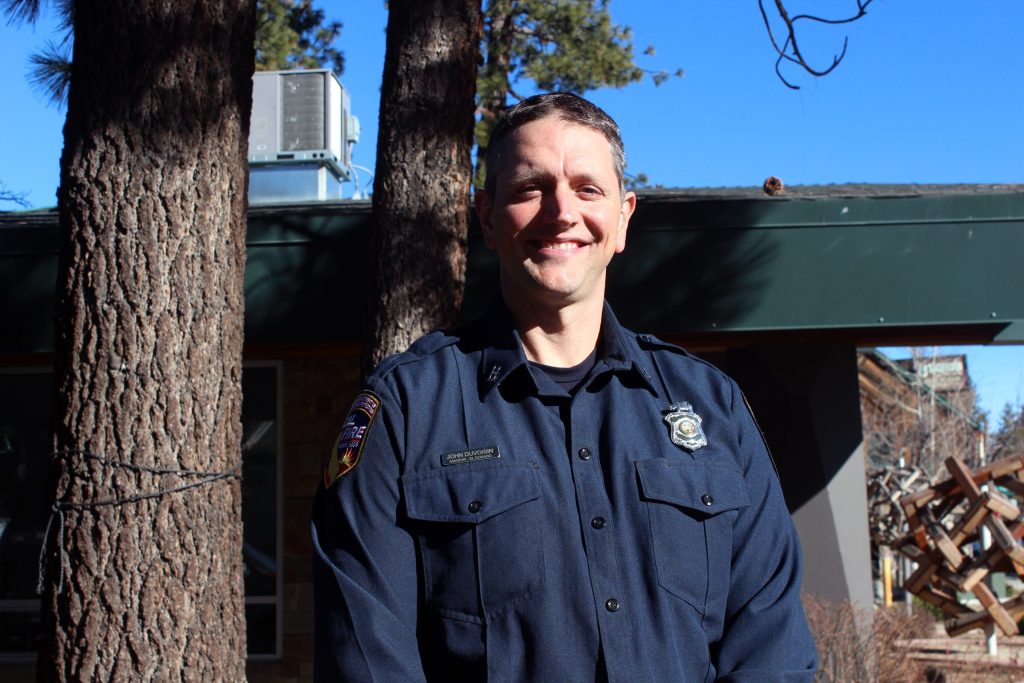
“There’s a lot of collective support for locals. When you’re involved in the community, you get to know so many people,” said Duvoisin. “The public has a good perception of firefighters and I like that—I like to help contribute by being someone who shows up and is there to help.” He recalled how the community really came together for the Caldor Fire. Even now, he says, friends who know he works as a firefighter rely on him to keep them informed on fires in the basin.
Now as a captain, he says, “I get to be the representative of what the job is for new crews. Our crews are from the California Conservation Corps and a lot of times, people will say ‘I never would have imagined I’d do this.’ I get to show people what they’re capable of and it’s fun to see people improve.”
Duvoisin says he tries to pull from great manager he’s had, especially the ones who have had balance in their line of work. “There’s a big time demand, but I’ve always really respected people who put an emphasis on their family life ahead of the job. A lot of this job is mental, not just physical,” he said. “The people who were calm and collected, keeping their composure in emergencies—those are the people we need to be mentors.”
While working as a firefighter is fairly unpredictable, Duvoisin says it brings a lot of excitement. “You never know what you’re gonna get and I think that’s kind of a great part of the job.” And though he, like many other firefighters, went to help with the Eaton and Palisades fires in 2025, he counts himself lucky that he works in the community he lives in.
“My wife works at Bijou—it’s the reason why we moved here. And it was important to have my family integrate into a safe, small community that has plenty of outdoorsy, active things to do,” said Duvoisin. His wife, who is Mexican, also was drawn to the big Latino community in Tahoe.
To potential firefighters, he urges them to take a chance. “I’m not in a generational family, I took a chance on it. My path came after high school, it wasn’t something set for me early on. Ultimately, you have to follow your heart.”
“It feels good to do things for other people,” Duvoisin said. “You can see a difference in the work you do, how helpful it is to the community. The joy you get from helping others is really rewarding.”
Tyler Jack
Jack is a third-generation South Lake Tahoe local, who now works as a battalion chief for the city. He knew from a young age that he wanted to be a firefighter. “It’s just gratifying to be able to not just follow my dreams and be a fireman, but to do it in my hometown. I’m humbled and so privileged to be able to do this job.”
Jack isn’t from a family of firefighters, but he always wanted to be in the career. “I knew that firemen help people, and to this day it still feels good to help people.” As soon as he could, he took EMT classes at the community college and volunteered at the fire department. His senior project was with Lake Valley Fire, and he said, “From that moment on that I started that project, I was always involved in some way, shape or form with the fire department.”
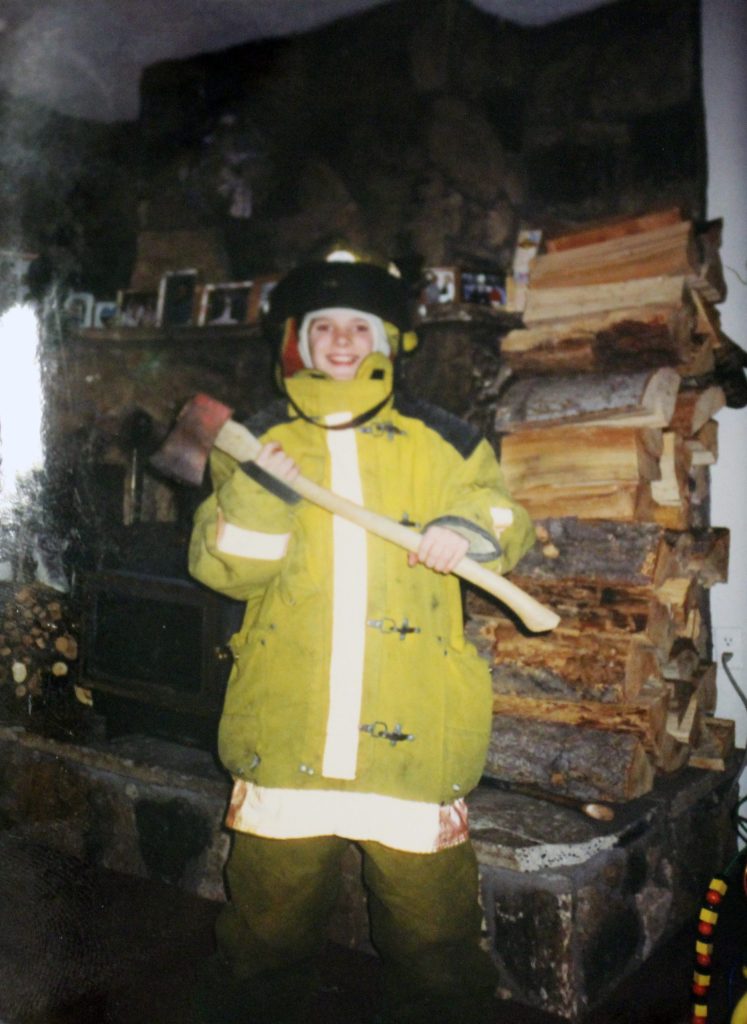
His mentor for the project, Larry Trauner, was someone he ran into completely by chance. “I was bussing tables at a restaurant, and he told me he was a mentor for the fire department on senior projects. Like a typical high schooler, I forgot to get any information—but he walked in the door at my aunt’s birthday party. He was my aunt’s neighbor.” Since then, he says, “He was and always will be a huge part of my journey.”
Another part of his journey was his best friend, who shared his passion for firefighting. “We grew up together and we kind of planned it out ourselves. After high school, we signed up for the Forest Service,” said Jack. When he got a call to join the crew, his friend showed up too. “I asked, ‘Did you get a call too?’ and he told me, ‘No. But we do this together.”
Still to this day, Jack says he credits so many people with his success: fire chief Jim Drennan, his longtime partner Chris Wildman, fellow battalion chiefs and company officers—and of course his wife. “She’s my rock.”
It wasn’t an easy journey for Jack to get to working with the city. “At the time, I really struggled academically. I didn’t pass EMT class the first time and I had to go back and take it all over again.” When he passed, he was hired on by the city in 2007.
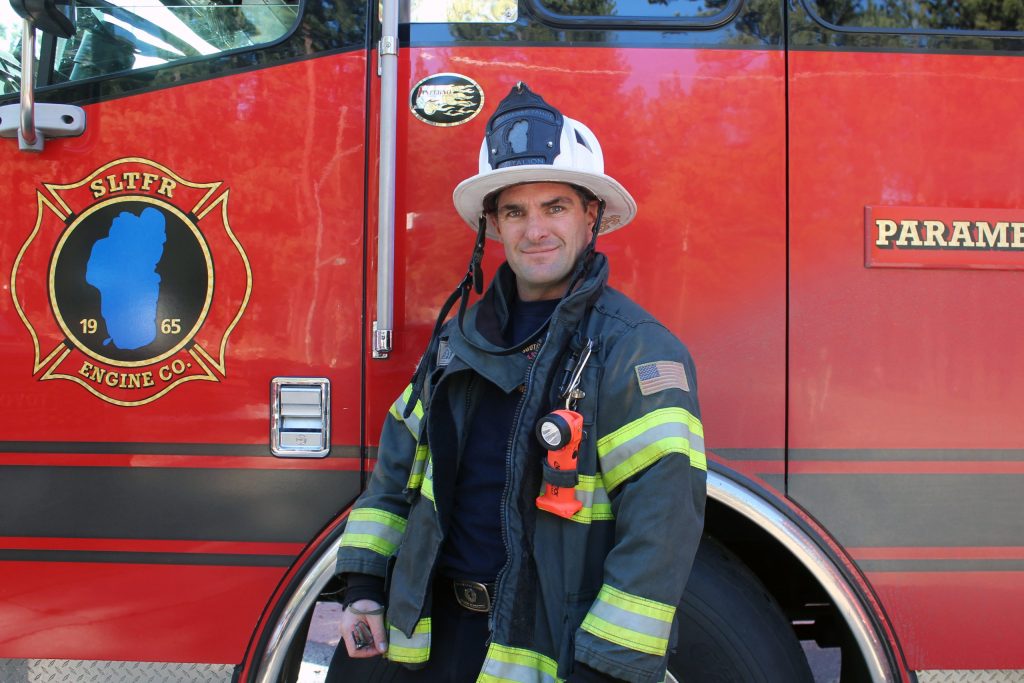
But when he got to medic school, he said, “I just teetered the line of being dismissed. When I took my final, I failed—by one question.” Luckily, he had the support of his family and his department to jump into the next program and try again. “I didn’t quit. And those were lessons moving forward that I’ve carried with me. It’s something I say to my co-workers and to my kids: if you want it, go get it.”
Jack started as a firefighter paramedic, then tested to captain after six years—an unusual route, as he skipped over engineer. Then, he promoted to battalion chief about two years ago. He’s worked as a strike team leader and on the mutual aid system to help with fires around the state. “You inherit this responsibility of putting yourself in harm’s way. It’s a noble part of the profession I take pride in.”
He takes a special pride in working in his community, though it’s not without its own pains. The Angora Fire took place just two months after he was hired, and he was serving at the same time as the Caldor Fire. “I don’t work for big departments with hundreds of employees. I work for a small town where the likelihood of having a connection is high. But as many times as it’s awful, I have ten more times that it’s not.”
Jack cares deeply for the people he works for. “We’re here to serve the public in any aspect. It doesn’t matter what they’re calling for, that’s their emergency. You can’t diminish that.”
“I may do different things in the seat I’m sitting in now, but I still strive to come to work happy, take care of my people and give them an atmosphere to work happy too. That will always be the same for me—doesn’t matter what my title is, I’m still a firefighter,” said Jack.
Jack says it’s important for him to take care of his body and his mental health to stay in the career, which can be heavy. “It’s a job where I tell my coworkers I love them and mean it every time. You have to rely on people in this job and the camaraderie, that sense of family, is remarkable.”
“I feel like I won the lottery, that I get to do come to work and do what I get to do. If they charged me a fee to do this job, I would pay it. I’m truly living the dream,” said Jack.
To young firefighters, he says, “Keep your nose clean. It’s a job that requires a clean record and a lot of trust. There’s a huge trust factor in this job. But you know, if this is something you want—then go get it.”
Editor’s note: This article originally appeared in the Summer 2026 edition of Tahoe Magazine.