
Some of the biggest checks in California politics never touch a campaign account. Most of them were written because Gov. Gavin Newsom asked for the money, totaling more than $340 million.
Elected officials are increasingly taking advantage of state laws that allow them to solicit unlimited sums of money from large corporations, unions, tribes or other special interest groups — even when those donors are seeking government contracts or involved in a government proceeding — so long as the money goes to a third party such as the politician’s favorite nonprofit.
Newsom didn’t invent California’s behested-payment system. He has simply used it more aggressively than any other elected official in state history.
Since taking office in 2019, Newsom has reported more than $340 million in behested payments. Records show he also directed more than $5 million as lieutenant governor. The next-largest total belongs to former Gov. Jerry Brown, who reported about one-tenth as much money.
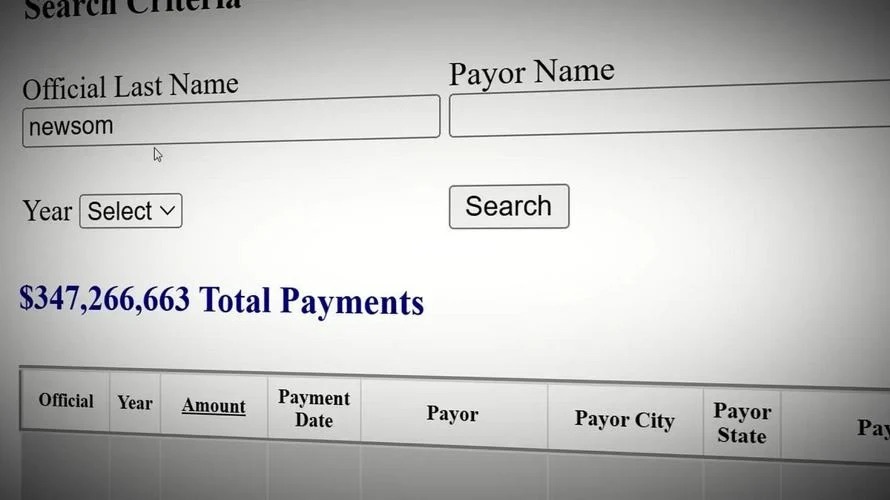
The arrangement is legal but only lightly regulated. Supporters say the money often goes toward good causes such as disaster relief. Opponents say it gives powerful donors another way to spend big at the request of politicians who can make decisions that affect their bottom line.
Among the beneficiaries: California Partners Project, a nonprofit founded by First Partner Jennifer Siebel Newsom. The nonprofit received 42 payments at the behest of the governor totaling $4.28 million – including $1.8 million from the Federated Indians of Graton Rancheria.
The tribe operates a major casino and has had significant gaming interests before state and federal officials. Newsom requested several large payments from the tribe to California Partners Project while the tribe was involved in battles over casino expansion and rival gaming projects. One of the tribe’s donations came at Newsom’s behest two weeks after the governor signed a new gaming compact between California and the tribe.
Some of this has been reported before. What has not been fully examined is the scale of Newsom’s behested-payment operation — and, donor by donor, what those contributors later sought or received from state government.
“No one is going to be upset that Meta is making a $1 million contribution to wildfire relief,” said Richard Briffault, a Columbia University law professor and campaign finance expert. “It’s hard to protest that, but if (A) it was the result of a solicitation from a governor, and (B) the governor does something for them? Then it’s an issue.”
‘That’s how the sausage is made’
California’s Political Reform Act was approved by voters in 1974 after the Watergate scandal. It includes strong language warning citizens about wealthy individuals and organizations using large sums of money to curry favor with politicians. It states public officials should conduct the public’s business “free from bias” and acknowledges previously “inadequate enforcement by state and local authorities.”
At the time, lawmakers hadn’t considered fundraising efforts by elected officials. Rules surrounding behested payments weren’t added to the California Political Reform Act until decades later.
Today, advocacy groups seeking greater transparency say it is nearly impossible to find a California politician willing to author a bill that would regulate themselves.
“It’s kind of the Wild West for behested payments,” said Sean McMorris, who manages the transparency and ethics program for California Common Cause. “These are powerful people directing the flow of money from special interests who need favors… It’s not going directly to the politician, but it is being directed by the politician.”
California Common Cause is a nonpartisan organization that has been seeking greater regulations around behested payments for years. McMorris believes lawmakers have written themselves a blank check.
“Even though you’re asking someone to contribute money to a good cause, you are still asking them to give money,” McMorris said. “That’s how the sausage is made… Even if it’s not an explicit quid pro quo, it doesn’t have to be. Both sides know how the game is played. Both sides know what the possible consequences are of giving or not giving.”
Who are the donors?
Newsom has previously warned Californians about “billionaires seeking to buy elections,” but behested payments don’t fall within the same rules as campaign donations.
A review by The Center Square has found that the largest donors of behested payments are rarely passive philanthropists with no government interests. Instead, they are often sophisticated organizations that employ lobbyists, monitor legislation, participate in regulatory proceedings, are engaged in lawsuits, or receive government contracts.
Facebook (aka Meta) has donated nearly $32 million at the behest of California’s elected officials, making it the largest donor in California’s Fair Political Practices (FPPC) database of behested payments.
The tech company has had extensive business with California officials before and after its donations, including but not limited to legal and regulatory fights against the California Attorney General’s Office. Facebook donated more than $26 million for COVID-19 relief in 2020. That same year, Facebook was under investigation for its privacy practices under the California Consumer Privacy Act, a landmark privacy law affecting companies that collect and monetize consumer data.
Records from the California Secretary of State’s Office show Facebook spent $1,566,147.78 on its lobbying efforts related to dozens of bills during California’s 2019-2020 legislative session. In some cases, the tech company focused its lobbying on “COVID-19 issues” and lobbied the governor’s office directly on “housing policy.”
Newsom later asked Facebook to contribute $650,000 to Enterprise Community Partners in 2021 to help Project Homekey with “housing for people experiencing homelessness,” as Facebook continued its lobbying efforts on housing. That same year, a federal judge dismissed a multistate lawsuit joined by California alleging monopoly conduct tied to Facebook’s acquisitions of Instagram and WhatsApp.
Facebook has not responded to a request from The Center Square for comment.
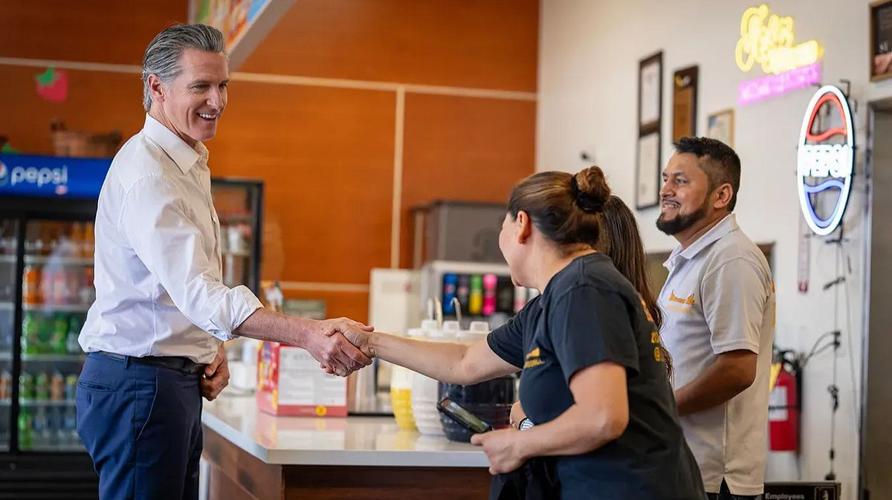
FPPC records show Blue Shield of California and its affiliated entities have donated more than $21 million at the request of California’s elected officials, making it the second-largest donor. Blue Shield’s largest donation of $20 million was in 2020 to Enterprise Community Partners – at the request of Newsom – to support Project Homekey.
The Newsom administration later selected Blue Shield to serve as California’s third-party administrator for the statewide COVID-19 vaccine network in 2021. Blue Shield stated the company would perform the work “at cost,” would not profit from the state, and would bill only actual expenses supporting the vaccine network. The no-bid contract allowed Blue Shield to recover up to $15 million in non-staff expenses.
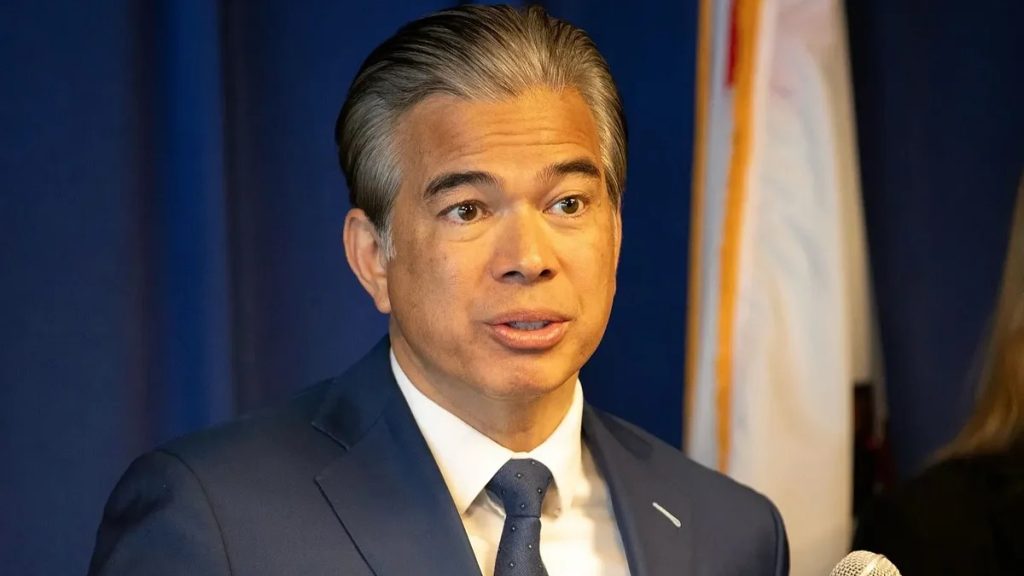
FPPC records show Blue Shield was also the recipient of $5,000 from the Asian and Pacific Island Legislative Caucus Foundation in 2015 at the request of California Attorney General Rob Bonta. At the time, Bonta was a member of the California State Assembly.
Mark Seelig, a spokesman for Blue Shield, declined an interview request from The Center Square and refused to answer questions related to Blue Shield’s government business at the time of its behested payments.
Instead of agreeing to an interview, Seelig emailed a statement touting Blue Shield’s transparency: “We regularly support candidates for public office from both major political parties who share our mission of improving healthcare access and affordability. Our contributions are fully and properly disclosed according to applicable laws.”
“The politicians know very well who to go to,” McMorris said. “They’re not calling up an average person. They’re going to someone with a lot of money and someone who they know needs something from them… This whole behested payment thing doesn’t really work unless you can solicit people and entities who need things from you at the government level.”
Sierra Health Foundation, a Sacramento-based private philanthropy, and its separately-incorporated affiliate, the Center for Health Program Management, have operated on both sides of California’s behested payment system. Together, it has been the fifth-largest donor, giving nearly $14.9 million. It’s also one of the system’s largest recipients. FPPC records show state officials funneled $45.1 million into the organization through behested payments.
Newsom was responsible for nearly all of the donations moving in both directions. The nonprofit has been selected to administer government programs and receive state grants. A spokesperson has not responded to a request from The Center Square for comment.
Foundations commonly pool money and distribute it to community organizations. Although the practice is common, it raises more questions as the money becomes more difficult to track.
Newsom directed $381,820 from the nonprofit California Forward in 2022 and 2023 to pay former Los Angeles Mayor Antonio Villaraigosa for a newly-created infrastructure advisor position… that was never, technically, a state position. California Forward was listed as the only donor, at Newsom’s behest. The nonprofit was not required to disclose source donors who funded Villaraigosa’s salary.
Sarah Walsh, a spokeswoman for California Forward, stated she could not comment because “the decision-makers who were part of the project that resulted in behested payments are no longer at CA FWD.”
Briffault agrees it can be extremely difficult to follow the money and track down donors who might be trying to curry favor with politicians. He believes even the appearance of a conflict has previously been enough to dissuade politicians from soliciting money as aggressively as Newsom.
“A place like California? Almost any company or entity of this size is going to have business with the state,” Briffault said. “There’s no guarantee (of influence), but you could certainly think that’s what’s going on.”
Enforcement
FPPC rules specifically anticipate donors might have contracts or proceedings before a government agency. Rather than restricting behested payments in those cases, the law relies on disclosure to inform the public.
Newsom was recently fined $31,500 for his failure to timely file 36 behested-payment reports worth more than $5.5 million. The majority of those funds were raised for the California Fire Foundation.
Donors included BlackRock, PayPal, and Uber Eats.
Newsom also failed to timely report 18 other behested payment reports between 2019 and 2024, according to the FPPC. He was fined $10,500.
State law requires disclosure within 30 days. Newsom’s filings ranged from 64 to 229 days late.
The FPPC made no judgment about whether the donations themselves were appropriate, stating only that timely, transparent reporting “increases public awareness regarding potential attempts to influence.”
Last month, Newsom revealed he was under criminal investigation by the United States Department of Justice. He characterized the case as a personal attack and political intimidation tactic targeting the mother of his children.
“Anyone who has challenged Donald Trump has ended up on his hit list,” Newsom said. “Today, I proudly join that list… To get me, he’s coming after my wife, Jen.”
Newsom isn’t the first California politician to solicit payments for his wife’s nonprofit.
Google gave $500,000 in 2014 to a nonprofit employing Rob Bonta’s wife, Mia Bonta, at his behest. FPPC records show the donation to “Bring Me A Book” was meant to “support (an) early literacy initiative in the Bay Area for preschoolers through (the) use of technology.”
Records show Bonta also solicited several smaller donations for Literacy Lab, another nonprofit employing his wife. Two of the four donations were from Pacific Gas and Electric.
Bonta created his own nonprofit in 2017, the Bonta California Progress Foundation. FPPC records show he has funneled $122,500 into that nonprofit, which has also given money to Literacy Lab.
The case prompted Bob Stern, an original co-author of California’s Political Reform Act, to argue officials should be prohibited from directing money to an organization that employs their spouse.
Rob Bonta went on to become California’s attorney general. Mia Bonta went on to become a member of the California State Assembly.
Disclosure forms now ask officials to identify immediate family members who work for a nonprofit recipient of behested payments.
Both Newsom and Bonta have not responded to interview requests from The Center Square. Instead, Newsom’s chief deputy communications director emailed a statement broadly characterizing behested payments as “a lawful, bipartisan tool to support charitable and public-service efforts that benefit Californians (and that might otherwise be borne by taxpayers).”
The statement stopped short of addressing conflicts of interest or any specific payments made at Newsom’s request.