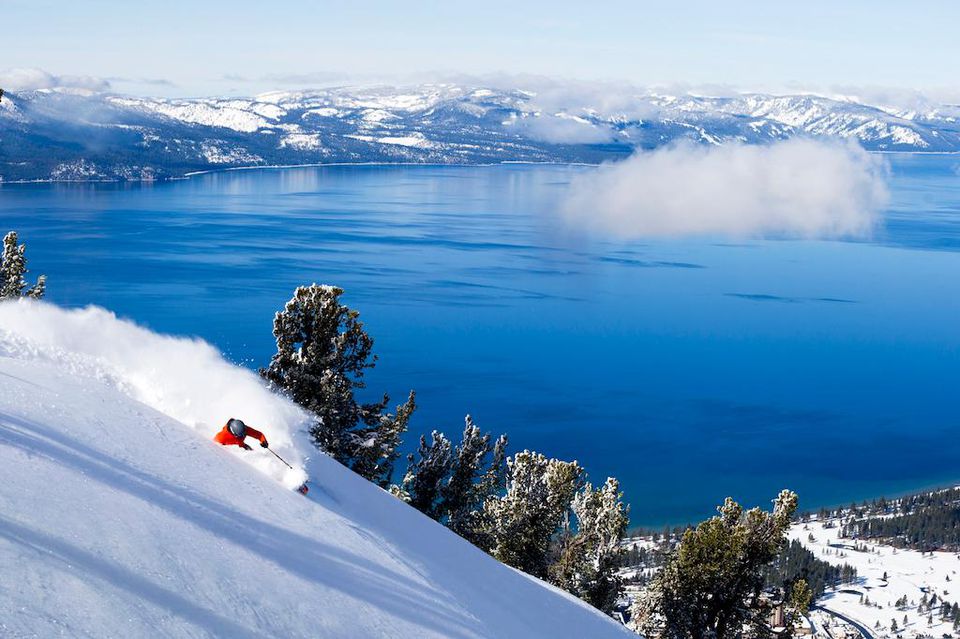
Just east of the Sierra Nevada, a whiskey distillery is quietly redefining what it means to be Nevada-made. At Frey Ranch Distillery, whiskey doesn’t begin in a barrel. It begins in the soil.
Long before bourbon tourists lined up in Kentucky, the Frey family was putting down roots in Nevada. Colby Frey’s family has been farming here since 1854 – predating Nevada’s statehood – first in Genoa, at the foot of the Sierra, and later in Fallon, drawn by the promise of water flowing from Lake Tahoe through the Truckee and Carson Rivers.
Today, that legacy spans thousands of acres.
“We started off with about 738 acres,” Colby explains. “Now we own about 2,000. We farm about 2,500 with some neighboring farmland, which is about four square miles.”
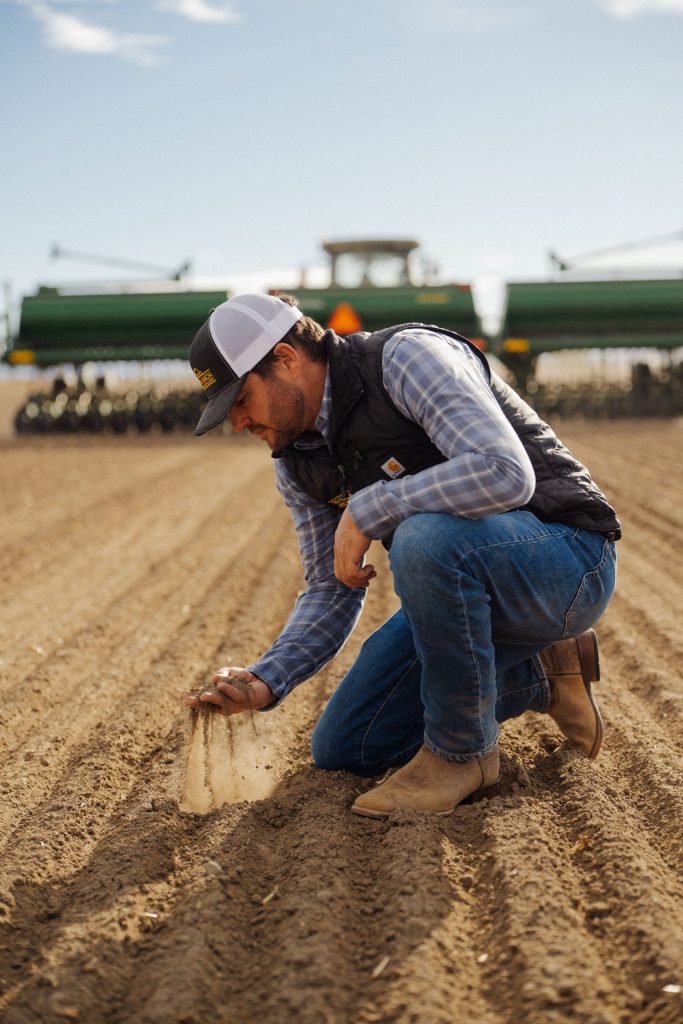
Alfalfa still grows in rotation, but so do the grains that define their whiskey: corn, rye, wheat, and barley. For Colby and his wife Ashley, those crops are more than commodities – they’re the foundation of a radically different approach to distilling.
The idea for the distillery wasn’t born from trend-chasing, it was born from necessity.
“There’s not really a future in just commodity crops,” Colby says. “Land and water are so valuable – you’ve got to find something to justify it.”
In 2006, the couple made a leap. Instead of selling their grain, they would transform it.
That decision placed them among a rare category in American whiskey – estate distilleries, where every grain in the bottle is grown by the distiller. While estate wineries are common, estate whiskey remains a rarity.
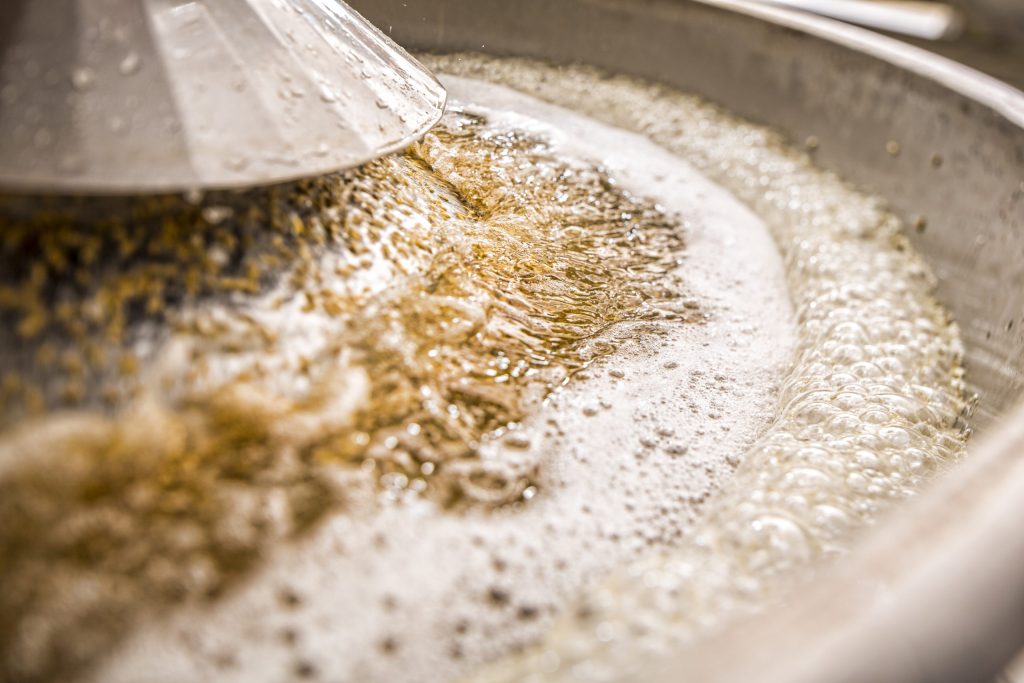
“Grain is to whiskey what grapes are to wine,” Colby says. “Nobody really talks about the grains like they should.”
At Frey Ranch, they’re the whole story. Unlike many brands that source and blend bulk spirits, Frey Ranch starts from scratch. Every bottle reflects decisions made years earlier in the field and the distillery.
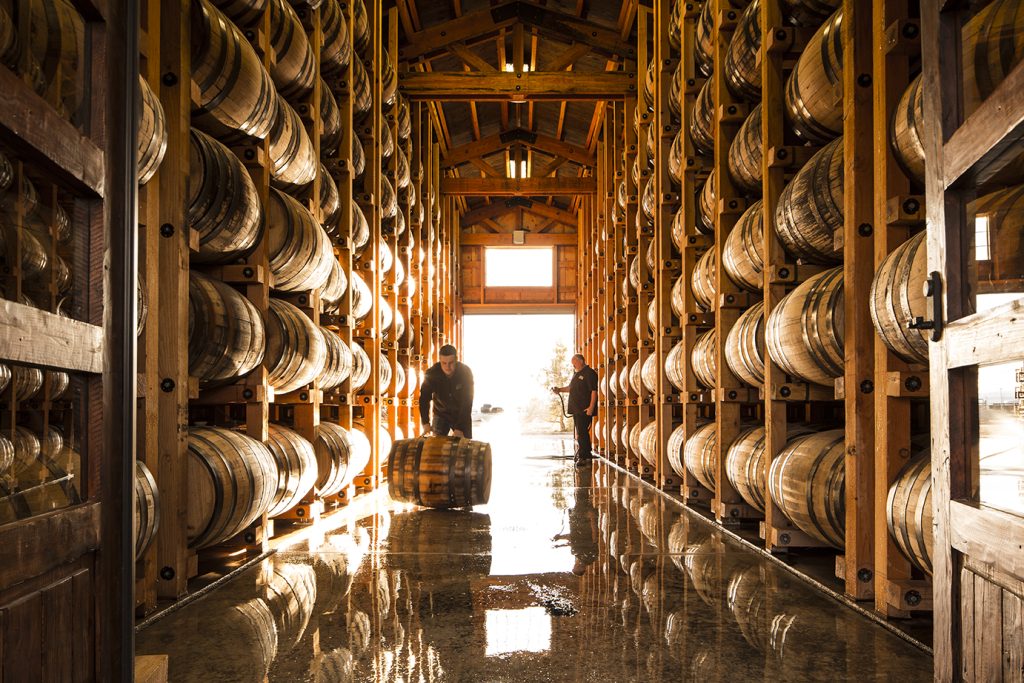
“We are limited to sell today what we grew six years ago,” Ashley explains. “What we distilled five years ago – what we put in barrels – you have to decide five or six years ago how much you’re going to have available”
That timeline shapes everything – from how much grain they plant to where they distribute their bottles. Expansion isn’t just a business decision. It’s an agricultural one.
When Frey Ranch enters a new market, Ashley keeps the message simple: people, process, place.
The people are the founders themselves – still deeply involved, still telling their story. The process is farm-to-glass, every grain grown on-site and the place is unmistakable: Northern Nevada, far from the traditions of Kentucky or Tennessee.
“We’re not Las Vegas,” Ashley says. “We’re pretty gritty … authentic.”
That authenticity resonates. In a crowded whiskey landscape dominated by heritage brands and guarded recipes, Frey Ranch leans into transparency by sharing mash bills, showcasing their farming and inviting visitors to see it firsthand. Even the bottle tells a story.
Ashley led a packaging redesign that transforms the whiskey into something tactile and symbolic: a belt-shaped label inspired by Colby’s grandfather, a bolt-shaped topper echoing farm hardware, and a signature yellow drawn from the color of their corn.
Stamped into the glass is a phrase that captures the philosophy behind it all:
Be good to the land and the land will be good to you.
It’s not marketing copy – it’s a generational mindset. Timing, as it turned out, would test that mindset.
Frey Ranch launched its bourbon in December 2019. Three months later, COVID shut down bars and restaurants across the world. Instead of retreating, the team leaned into what made them different.
“We could be nimble,” Ashley says. “We’ve got a small team. We can steer the ship a lot faster than these big legacy distilleries.”
The result: growth in one of the most uncertain periods the industry has faced.
Today, Frey Ranch is doing something few thought possible: putting Nevada in the same conversation as the world’s whiskey capitals and being named among top whiskeys alongside Kentucky, Tennessee, Scotland, and Ireland.
“To be included in those legacy producing areas – that was the biggest honor for us,” Ashley adds.
Closer to home, the support has been just as meaningful. The distillery is now the number one ultra-premium American whiskey in Nevada, fueled largely by loyal fans in Northern Nevada and the Sierra region. From Truckee to South Lake Tahoe, that loyalty runs deep.
For visitors to the distillery, the magic isn’t just in the glass, it’s in the wind moving through the fields. The hum of equipment. The sight of grain that will one day become whiskey.
“Nothing is off limits,” Ashley says. “You can see the grains, the tractors, the stills, the barrels.”
Tastings are intentionally approachable, with small pours and big stories and the goal isn’t just to drink whiskey, but to understand it.
Running a distillery on a working farm blurs the line between life and work and the Freys don’t try to separate the two.
“We don’t,” Ashley says with a laugh when asked about balance.
Their kids are growing up in it – learning not just what whiskey is, but where it comes from. On a school field trip, their daughter proudly answered a question about corn’s uses with a single word: whiskey.
“She’s not wrong,” Ashley jokes.
Nearly two decades in, there’s no single moment the Freys point to and say, we made it.” Instead, it’s a series of milestones: new markets, new releases, unexpected recognition, and the simple thrill of seeing their bottle on a shelf – anywhere.
“We just feel like we have the best job in the world,” Ashley says. “It all starts with agriculture. That’s the heart of our operation.”
In an industry built on history, Frey Ranch is still writing its own. Not by imitating Kentucky. Not by chasing trends. But by returning to something more fundamental: the land itself.
Just beyond Tahoe’s edge, where desert meets the mountains, they’re proving that great whiskey doesn’t have to come from where it always has. Sometimes, it just needs to be grown.
Editor’s note: This article originally appeared in the Summer 2026 edition of Tahoe Magazine.