Tahoe’s Lands: Rescinding Protection, Risking Collapse
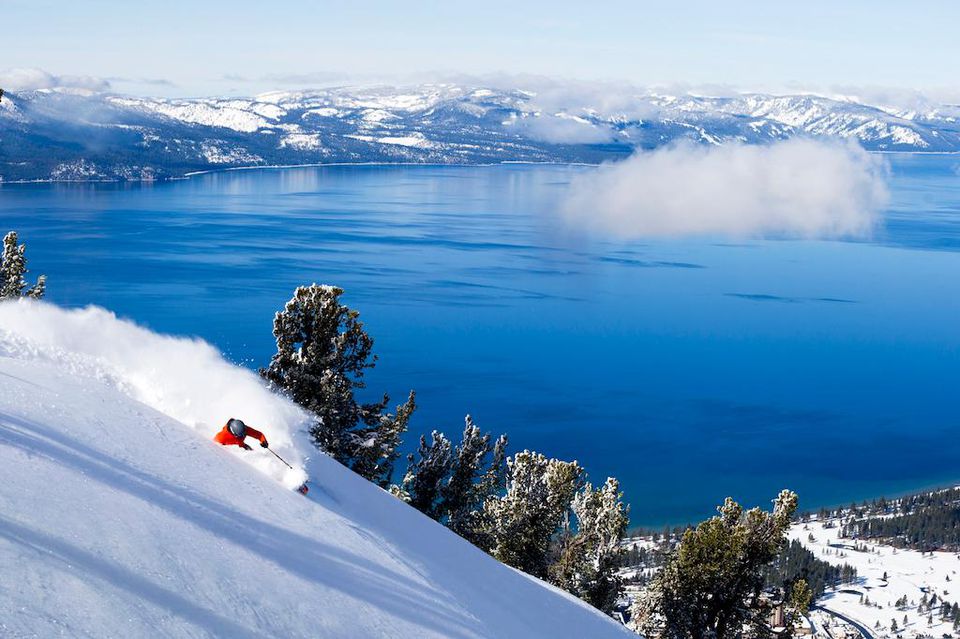
 For those living in the Tahoe region, public land is not an afterthought; it is our backyard. Those of us who spend time skiing, biking, climbing, or hiking in the national forest or state park lands of Tahoe understand the importance of public land. But the importance goes far beyond the enhancement of outdoor recreation. Public land is integral to our environment — from the health of the water that feeds the lake to the health of the forests that surround our homes. Public land is also existential to our own existence and the existence of the thousands of species that live here. This is because public lands hold the last remaining intact ecosystems in the Tahoe region, as well as in the entire United States.
An intact ecosystem is a web of interconnected biodiversity, every species providing an important service to another. In Tahoe, our healthy forests have multiple aged and diverse tree species and understory species where native flora and fauna can find habitat and enough sustenance to survive and thrive. Healthy forests do many critical things far better than unhealthy forests: provide clean water, clean air, nutrient-rich soil, sequester carbon, prevent catastrophic wildfire, and provide habitat for endangered species. Healthy forests communicate and share essential nutrients, such as nitrogen, through vast underground mycelial networks between individual trees. These connections keep the entire forest healthy and able to execute its essential functions.
Consider, for example, that healthy forests prevent erosion by locking soil within their roots. This soil is fertilized by the decaying material of thousands of different species, providing a nutrient-rich, healthy topsoil upon which the beginning of all life grows. The air in healthy, tall forests is significantly cooler, being shaded by tall trees and lush undergrowth, limiting evaporation and holding water within the soil. This water seeps into creek systems that deliver clean, cool water essential to salmon as well as to the farmers in the Central Valley. Old growth forests are harder to burn. Talk to anyone who has fought a wildfire in California and they will tell you what a relief it is for a fire to run up against an old growth/mature forest. Put simply, intact and healthy ecosystems provide us with food, water, air, and prevent us from burning to the ground. They are our lifeblood.
It is no secret that Tahoe’s ecosystems face many threats. For instance, industrial mismanagement practices used on private forest land such as unregulated clear-cutting, livestock grazing, and pesticide use fragment what healthy land exists in our national forests, although there is perhaps no greater threat than the federal government’s vicious attack on public lands. Most alarmingly, the federal government is ending a pivotal administrative rule that has protected areas of the Tahoe National Forest, as well as millions of acres in national forests across the country, by preventing logging, road building, mining, and drilling on undeveloped national forest lands. The Roadless Rule is expected to be rescinded later this year.
Here in Tahoe and elsewhere, we are at an inflection point where the abandonment of our precious public lands through development, commercialization, privatization, mismanagement, and disregard could well lead to the collapse of vital and irreplaceable regional ecosystems. We cannot afford to further compromise the health of our land. I urge each of us to relentlessly advocate for public land and a holistic approach to public land management, which makes ecosystem preservation the highest priority. Call all your elected representatives and support local grassroots organizations protesting development and working to restore our local ecosystems. It’s now or, quite possibly, never.
~ Nicolas Bakken-French is an environmental researcher and glaciologist who directs field studies at the Oregon Glaciers Institute. He lives in Tahoe, where he works as a ski guide and avalanche educator in Alaska, then he migrates back to the Pacific Northwest and Northern California to conduct field studies in the summer. You can learn more about his work at nicolasbakkenfrenchphotography.com.