LAKE TAHOE, Calif. – After years of extinction in California, the state could have a roadmap to reintroduce the grizzly bear by 2028 through California SB 1305, or the California Grizzly Restoration Act. Others worry about the impact that reintroducing an apex predator could pose to rural communities in bear country.
The bill, which was introduced by Sen. Richardson and coauthored by Sen. Weber Pierson, Stern and Blakespear, would require the Department of Fish and Wildlife to develop a roadmap for the reintroduction of grizzly bears. This would require a scientific assessment and consultation with Native American tribes in California. The California Grizzly Restoration Act was also co-sponsored by the Yurok and Tejon tribes.
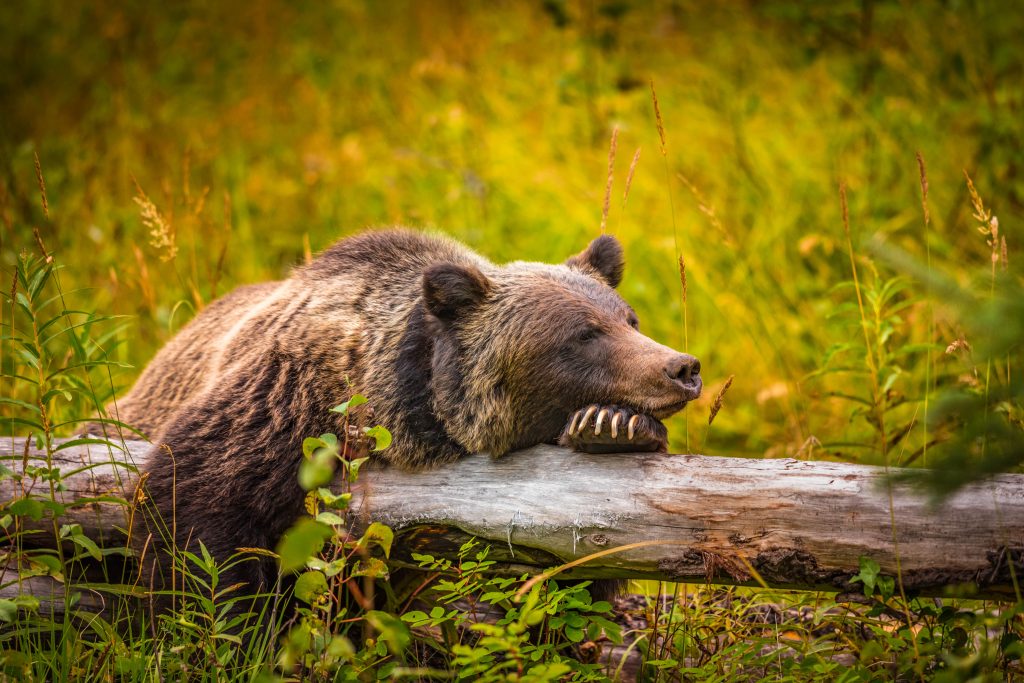
Crucially, the bill would prohibit reintroduction until ecological and biological research was done into the viability of establishing a grizzly population, along with consultation with tribes and communities.
Grizzlies have been extinct in California since 1924 after they were killed by settlers, miners, ranchers and government agents. In the time since, California has recovered various species and reintroduced them to the state, such as the California condor, tule elk, gray wolf and North American beaver.
Although it was thought that the subspecies in California was distinct, genomic research has shown that they were part of the greater Ursus arctos populations distributed through Montana, Wyoming and western Canada. Those populations would provide the potential sources for grizzly reintroduction.
The California Grizzly Restoration Act passed in one senate committee with a 5-2 vote and is set for a hearing on May 4.
Assemblymember Heather Hadwick, who represents District 1 (including Tahoe), has opposed this bill, saying that the introduction could impact livestock, public safety and local economies.
“I am dedicated to continuing to advocate for a practical, science-based approach that prioritizes public safety, protects working lands, and ensures rural voices are not sidelined in decisions that directly impact their way of life,” said Hadwick. “Our wildlife management system is already stretched thin, with increasing predator populations and habitat pressures contributing to ecological imbalance and limited prey availability every day.”
There’s concern among residents that given black bear and human interactions in Tahoe, grizzly bears may be far less friendly and more prone to attack when interacting with people. Danielle Oyler, who works at Montana’s Fish, Wildlife and Parks department, told the Tribune that when managing human-bear conflict, grizzlies and black bears are attracted to the same sources.
“Grizzlies and black bears overlap in population here, and in the western half of Montana, we see some of those human-bear interactions,” said Oyler. “Grizzlies are also attracted to things like garbage, birdfeeders and pet food—anything that provides calories to them.”
Oyler says they deal with it in the same way too. “We use the same deterrent methods, like electric fences and mats, noise makers and bear-resistant containers.”
Anecdotally, black bears seem to be more often sighted in towns with black bear and grizzly populations, but Oyler says this could be a result of a number of factors. Black bears may tolerate humans better than grizzly bears, or on the flip side, humans may have low tolerance for grizzly bears and are more likely to scare them away.
A 2024 study in Yellowstone National Park on black bears and grizzly bears showed that grizzlies were tolerant of recreationists and rarely attacked people, but were more likely to display agitation or warning behaviors rather than the neutral state black bears tended to show. However, attacks from both grizzly bears and black bears were recorded more often in the backcountry areas.
But what about how grizzlies and black bears interact with each other? Oyler says that food competition and pressures could exert an impact on how they behave. She noted that among other bears in Alaska, it has been observed that a higher food availability leads to higher tolerance for other bears—that is, the more food there is, the less territorial bears are, since there’s plenty to go around.
In 2010, Schwartz et al. published a study that showed black bears were likely adjusting their behaviors, preferring to be more active in the day rather than dawn and dusk, which is when grizzly bears tend to be active. The authors pointed out that bears also alter their activity patterns in response to humans.
There’s clear anxieties among rural communities about the impact to livestock and those who recreate in backcountry should grizzly bears be reintroduced, especially as the current bill means that the grizzly bear gets several exemptions to the current Fish and Wildlife Code. But the bill may continue to garner support, as the text reads:
“The grizzly bear holds enduring cultural, historical, ecological, and symbolic significance as a vital relative to many California Native American tribes, the emblem on the California State Flag, and the official state animal of California. Evaluating whether reintroduction may be feasible and advisable in particular areas of the state is also consistent with the state’s policy to maintain and restore healthy, natural ecosystems that sustain communities, support the economy, provide for recreation, and preserve California’s history, culture, and traditions, while recognizing the historical and ongoing harms inflicted on wildlife, natural systems, and California Native American tribes”