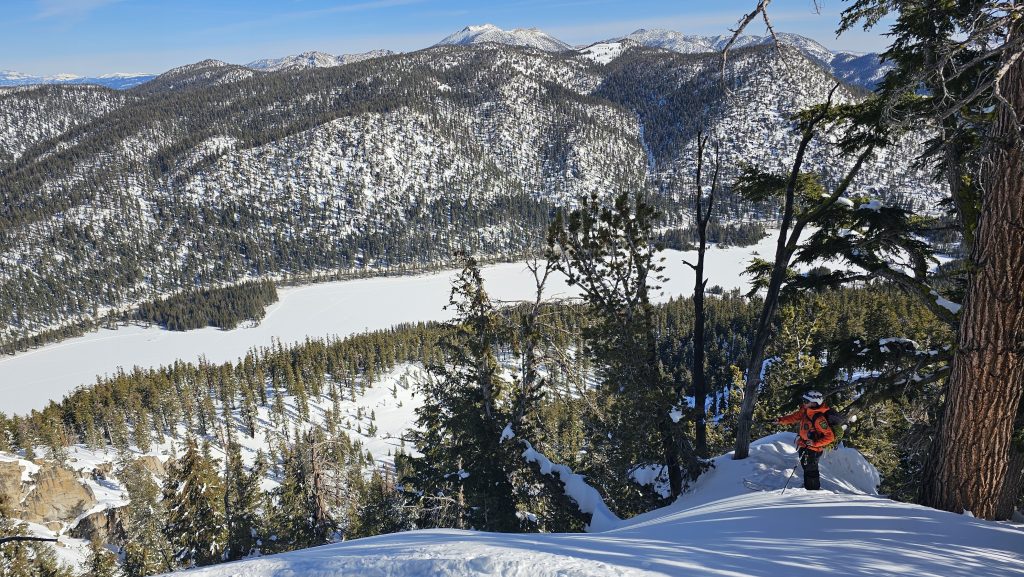
EL DORADO COUNTY, Calif. – In the wake of the recent avalanche tragedy that rocked the Tahoe Basin, you may have been made aware of the efforts put in place to rescue the skiers near Castle Peak. Many of the faces behind those efforts are from Search and Rescue (SAR) teams stationed throughout the region. Jamie Lefkowitz and the El Dorado County Search and Rescue (EDSAR) teams are among those in the basin who answer those dire calls for help.
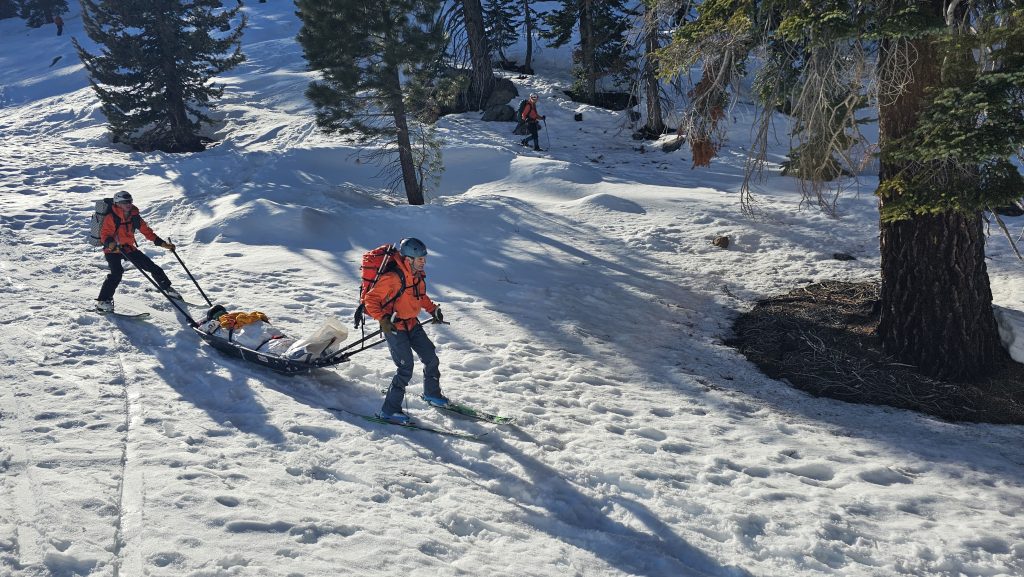
EDSAR, based in El Dorado County, is a non-profit organization composed of all volunteers. They work directly with the El Dorado County Sheriff’s office. When a call is placed to 911 involving a SAR operation, Lefkowitz is notified, and her and her team jump into action.
Lefkowitz has been a part of EDSAR for five years. “A few years ago, I took over the leadership of our technical teams which include rope rescue on rock cliffs and winter rescues,” said Lefkowitz, and within her role as Tahoe Technical Team Captain for EDSAR, she facilitates rescues involving avalanche terrain, ski rescues, mountaineering, and more.
Although she received a call for mutual aid during the Castle Peak avalanche, EDSAR was deployed on another mission that day and was unable to respond.
Steps taken during an EDSAR Avalanche SAR mission
“The first thing we do is gather information –how many people? What’s happened? Then we, as a team, assess our own safety. That involves checking the avalanche forecasts, which we have already done before the phone ever rings. We know the conditions every single day, we don’t just check them because we have a mission,” said Lefkowitz.
Once the situation has been assessed, EDSAR devises a plan that is safe for rescuers.
“In an avalanche response, our first concern is the risk of additional avalanches. That risk depends on the hazard for the day – is it snowing? Is it blowing? What are the avalanche problems, and we get that information primarily from the Sierra Avalanche Center.”
A common misconception often stems from the idea that SAR teams are put in unsafe situations when they receive a call. Lefkowitz refutes this notion.
“We are extremely knowledgeable, and we manage risk in very specific ways for SAR calls. The most important person is the rescuer; we rescue you. So we do not actually put ourselves in risky situations when we go out on search-and-rescue missions. We have a lot of resources that recreationalists don’t have,” explained Lefkowitz. “We are professionals at what we do and we train extensively for these situations.”
Amidst those resources are advanced transporters and communications. If EDSAR can’t respond on foot, they rely on air resources, such as drones and helicopters, only if it’s clear to do so. “In the middle of a storm, helicopters do not fly, so it depends on what’s going on, but avalanches don’t just happen during storms.”
After evaluating weather conditions, terrain conditions, the resources needed and a plan is formed, the team sets out, but not without gear and equipment in tow.
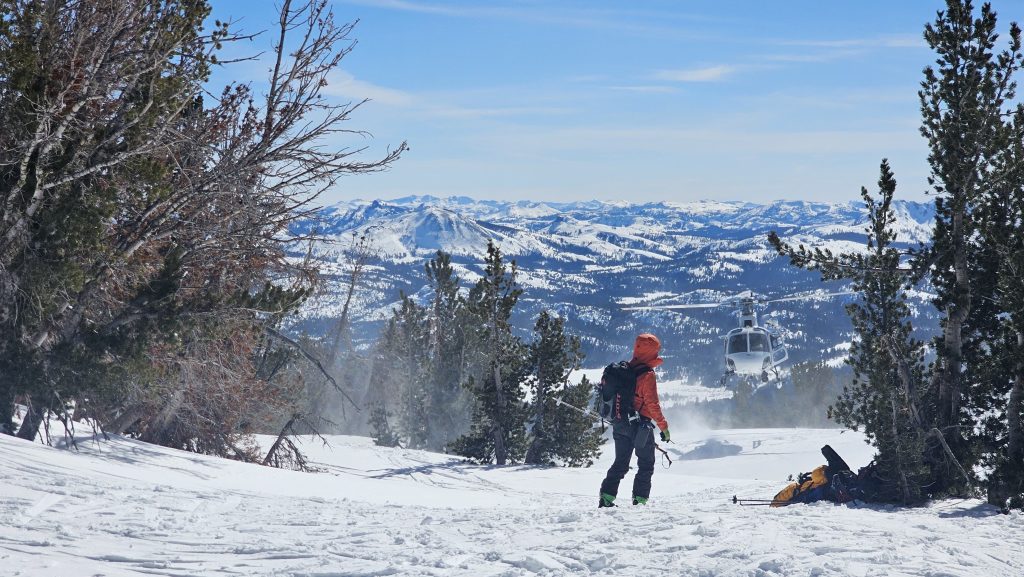
Equipment used during avalanche SAR missions
Backcountry rescue toboggans: “They’re very similar to ski resort toboggans, but they disassemble and we can carry them on our backs into the backcountry,” said Lefkowitz.
Warming kits: tools designed to help prevent or treat hypothermia, including hand warmers, blankets and hot water.
Avalanche transceivers: a device that sends out signals to beacons typically worn by backcountry recreationalists. The beacon emits a signal in “receive” mode which is then picked up by the “send” mode of the transceiver to find those who may have been buried under snow.
Professional avalanche search dogs: “We can call upon search dogs when people are lost in avalanche debris and they’re not wearing a beacon.”
RECCO detectors: RECCO detectors emit a radar signal and if the person in need of rescuing is wearing a RECCO reflector, which is sometimes sewn into winter gear, they can be detected from more than 600 feet away and buried under up to 60 feet of snow. “It’s kind of like a metal detector,” Lefkowitz said. “It is a much more passive way of trying to find someone,” often relating to recovery rather than rescue.
Lastly, and possibly the most important, is the training required to use extensive equipment such as these.
“We practice companion rescue multiple times a season as a SAR team, so it’s never a question of ‘Do we know how to find someone and dig them out of an avalanche?’ Our training is our number one piece of equipment that we bring out there.”
EDSAR’s passion fuels their purpose
Because the EDSAR team are volunteers, along with the vast majority of SAR operators in the state of California, their ‘why‘ is always a prime factor in their time spent, unpaid, helping others.
“I do speak on behalf of, I think, every SAR volunteer in the Tahoe Basin – we all really love what we do,” said Lefkowitz. “We volunteer for this because we want to. We want to go help people, and we encourage people to call 911 when they’re in danger. Not just in an avalanche incident, if you’re injured, if you’re lost, the sooner you call, the sooner we can help you.”