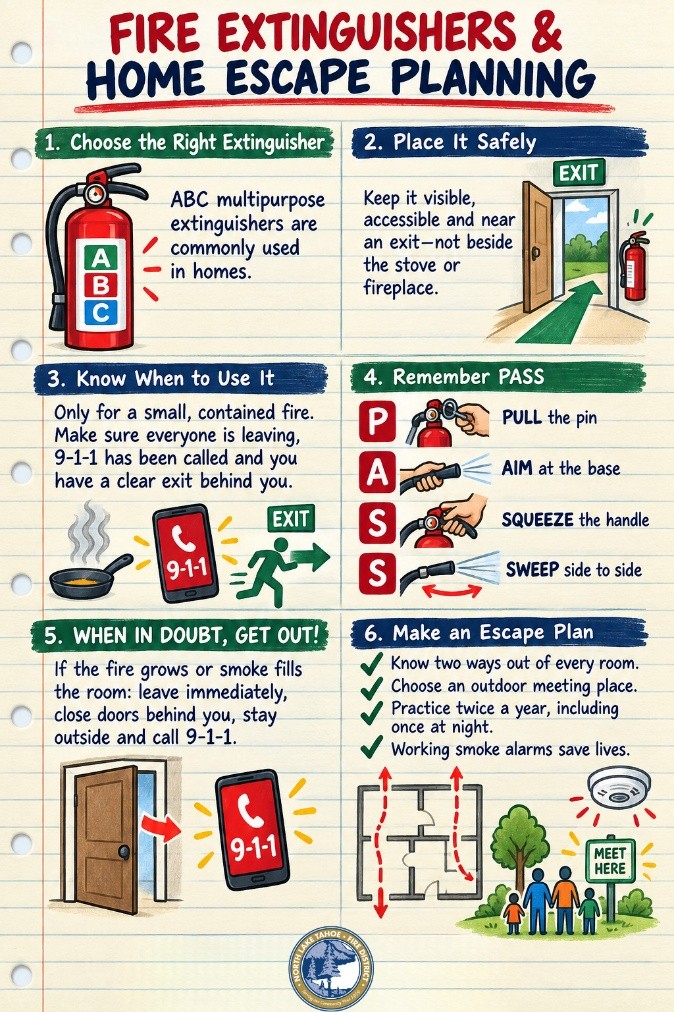
INCLINE VILLAGE, Nev. — A portable fire extinguisher can help control a small fire, but it is not a substitute for working smoke alarms or a practiced home fire escape plan. The North Lake Tahoe Fire Protection District (NLTFPD) encourages residents to understand how and when to use a fire extinguisher—and to make getting everyone safely outside the first priority.
Choose the Right Extinguisher
Portable fire extinguishers are labeled according to the types of fires they are designed to extinguish:
- Class A: Ordinary materials such as wood, paper, cloth, rubber and many plastics.
- Class B: Flammable liquids such as gasoline, oil, paint and some solvents.
- Class C: Energized electrical equipment.
- Class D: Combustible metals, such as magnesium and sodium.
- Class K: Cooking oils and fats commonly found in commercial kitchens.
Multipurpose Class ABC extinguishers are commonly used in homes. Choose an extinguisher listed by a nationally recognized testing laboratory that is large enough to control a small fire but easy to handle.
Extinguishers should be visible and readily accessible along a normal exit path. Do not place one next to a stove, fireplace or other potential fire source where flames or smoke could prevent you from reaching it. Check the pressure gauge regularly and replace or service the extinguisher according to the manufacturer’s instructions.
Know When to Use an Extinguisher
Only attempt to use an extinguisher when:
- The fire is small, contained and not spreading.
- Everyone else is leaving the home.
- Someone has called 9-1-1.
- The room is not filled with smoke.
- You have a clear escape route behind you.
- You are comfortable operating the extinguisher.
Remember PASS
When operating a fire extinguisher, remember the word PASS:
- Pull the pin.
- Aim low at the base of the fire.
- Squeeze the handle slowly and evenly.
- Sweep the nozzle from side to side.
Even if the fire appears to be out, leave the building and wait for the fire department to confirm that the area is safe.
Have a Home Fire Escape Plan
A fire can spread quickly, leaving only a few minutes to escape after a smoke alarm sounds.
Every household should have a plan that includes:
- Two ways out of every room, when possible.
- A designated outdoor meeting place that is a safe distance from the home.
- Working smoke alarms inside every sleeping room, outside each sleeping area and on every level of the home.
- Assistance for young children, older adults, household members with disabilities and anyone who may need help evacuating.
- A plan for safely evacuating pets without delaying your own escape.
- Practice drills at least twice a year, including one at night.
Make sure windows and doors open easily and that escape routes remain clear. A closed door may help slow the spread of smoke, heat and fire. When leaving, close doors behind you if it is safe to do so. Once outside, stay outside. Never return to a burning building for belongings, pets or any other reason. Call 9-1-1 from outside and tell the dispatcher if anyone may still be inside.
“Fire extinguishers can be valuable when a fire is small and contained, but personal safety must always come first,” said NLTFPD Fire Marshal John James. “If there is any doubt about whether you can safely control the fire, get outside, stay outside and call 9-1-1.”
Learn More & Stay Informed
For more information about Fire Extinguishers and home fire escape plan visit: https://www.nfpa.org/education-and-research/home-fire-safety/fire-extinguishers