
LAKE TAHOE, Calif./Nev. – The California Department of Fish and Wildlife (CDFW) confirmed the northermost detection of the invasive golden mussel in late June. The animals were found around the Port of West Sacramento, marking their journey up the golden state—and dangerously close to Lake Tahoe.
Despite the delicious sounding name, the golden mussel or Limnoperno fortunei is no treasure. The bivalves originate from China but were accidentally introduced to the Americas and were first detected in North America in 2024.
Like the quagga and zebra mussels, other aquatic invasive species, the freshwater mussel can severely threaten native biodiversity, water quality and destroy water infrastructure. They form dense colonies and can encrust rocks, pipes, boats and piers.
However, unlike the other invasive mussels, the golden mussel can tolerate a broader ranges of salinity and temperatures.
Their detection in Sacramento is the northernmost since the discovery of the golden mussel in the Port of Stockton in 2024. The CDFW believes that they are now from a source population within the vicinity of the Port of West Sacramento.
In the San Joaquin River Delta, the mussel has already colonized key pipes, pumps and gates, driving up infrastructure costs. Stockton city leaders recently declared an emergency when the mussels clogged a drinking water pump station, and Assemblymember Rhodesia Ransom announced $6 million of state funding would be going to support maintenance and prevention.
Golden mussels and other aquatic invasive species are on the docket for state legislators, who will be considering AB1772. The bill will help identify funding sources, create a database to inform water managers on contamination and establish a statewide standard for vessel decontamination.
A decision is likely to be made by August—but Lake Tahoe’s already been seeing boaters on the water, especially with the early spring and warm temperatures.
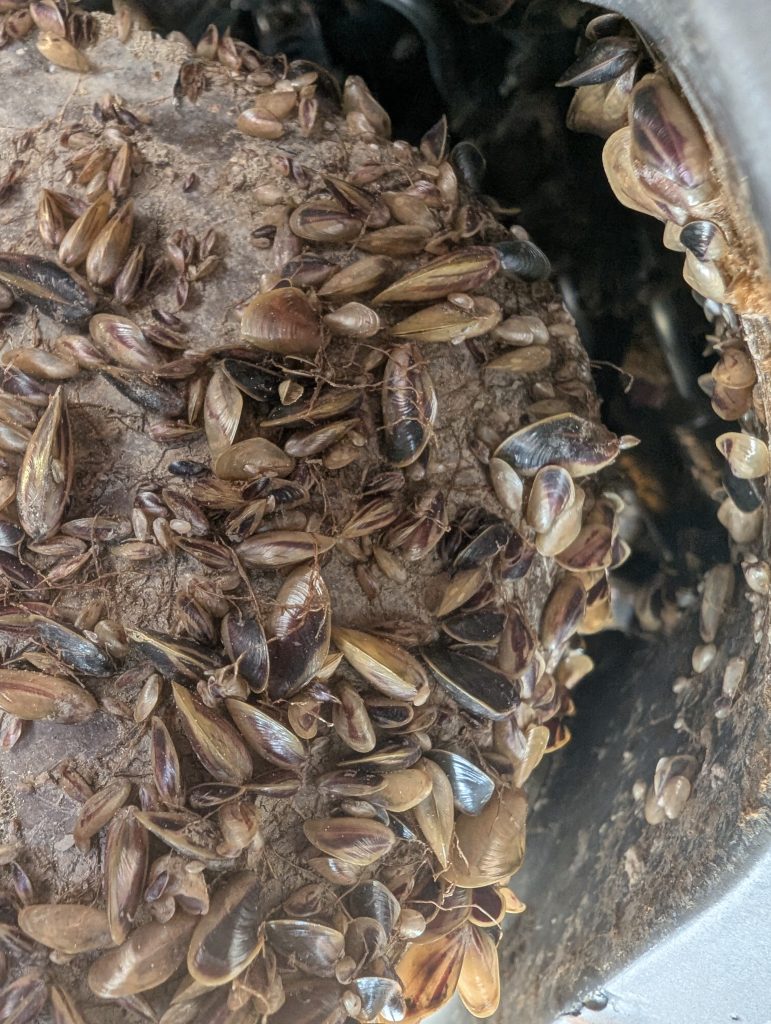
With the tourist season in full swing, Lake Tahoe’s waterways are some of the most popular to visit—and could be sincerely threatened if the golden mussel were to enter. The Tahoe Regional Planning Agency (TRPA) has helped intercept boats with golden mussels attached, once in May of last year and twice in June.
TRPA’s public information officer Jeff Cowen told the Tribune, “The report of golden mussels being found in West Sacramento isn’t completely unexpected, as the species was first discovered in a connected waterway. Seeing them closer to Tahoe is concerning, but the watercraft inspection program protocols developed in 2025 are designed to reduce the risk of any new aquatic species being introduced.”
Like many waterways, Tahoe utilizes the Clean, Drain, Dry program which asks those on the water to inspect their watercraft, kayak, life vests, paddles and anything touched the water every time it is removed from a water body.
Tahoe also has mandatory inspections and decontaminations for motorized watercraft, and inspectors maintain a list of infested waterways to interview boaters on as part of their assessment.
Cowen said, “We work with scientists and partners through the Aquatic Invasive Species Coordinating Committee to regularly evaluate the program and apply new information so that it maximizes protection for Lake Tahoe and the waters of the region, while ensuring everyone can enjoy all that Tahoe offers.”
Visit TahoeBoatInspections.com for inspection information, appointments, and to learn how to prevent the spread of aquatic invasive species. Program staff can be reached by email to AIS@TRPA.gov, or by calling (888) 824-6267.
You can help the CDFW monitor the state’s waters for golden mussel by reporting organisms suspected to be golden mussel to CDFW’s Invasive Species Program. Include the specific location of the observation, at least one clear close-up photograph of the organism and your contact information.
Submit reports via one of the following options:
- Online at Report Golden Mussel
- Via email to invasives@wildlife.ca.gov
- Via telephone to (866) 440-9530