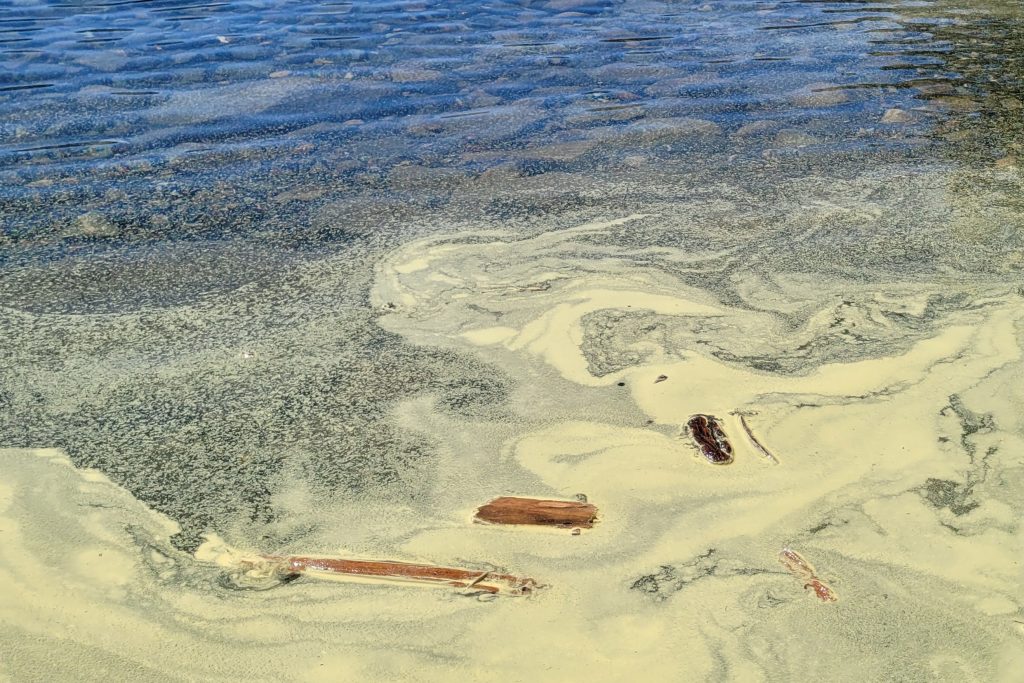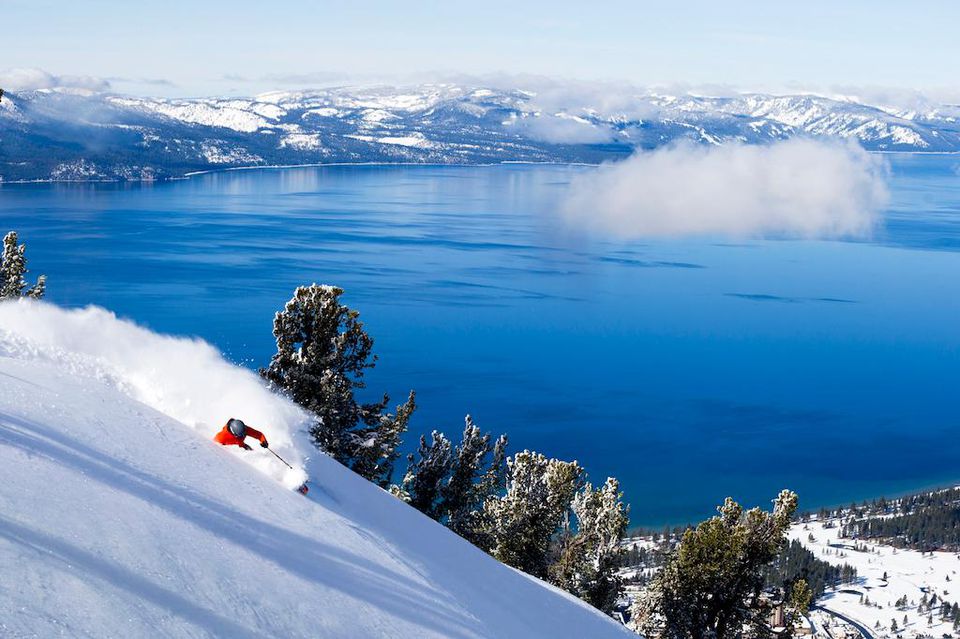
LAKE TAHOE, Calif./Nev. – It’s that time of year again when bright yellow-green clouds float through the air, turning the shallow waters of Lake Tahoe chartreuse instead of its characteristic blue. It sticks to streets, to clothes, car windows and pet fur, causing sneezes and watery eyes for many. Pollen counts from last year don’t tip into the highs as many times as this year’s do, so it may result in more allergy symptoms for those who have them.
Pollen season starts when plants begin to release their spores to fertilize other plants of their species. In the case of pine trees, their strategy is to rely on the wind to carry the load to other trees—meaning they have to produce a lot of it to be successful.
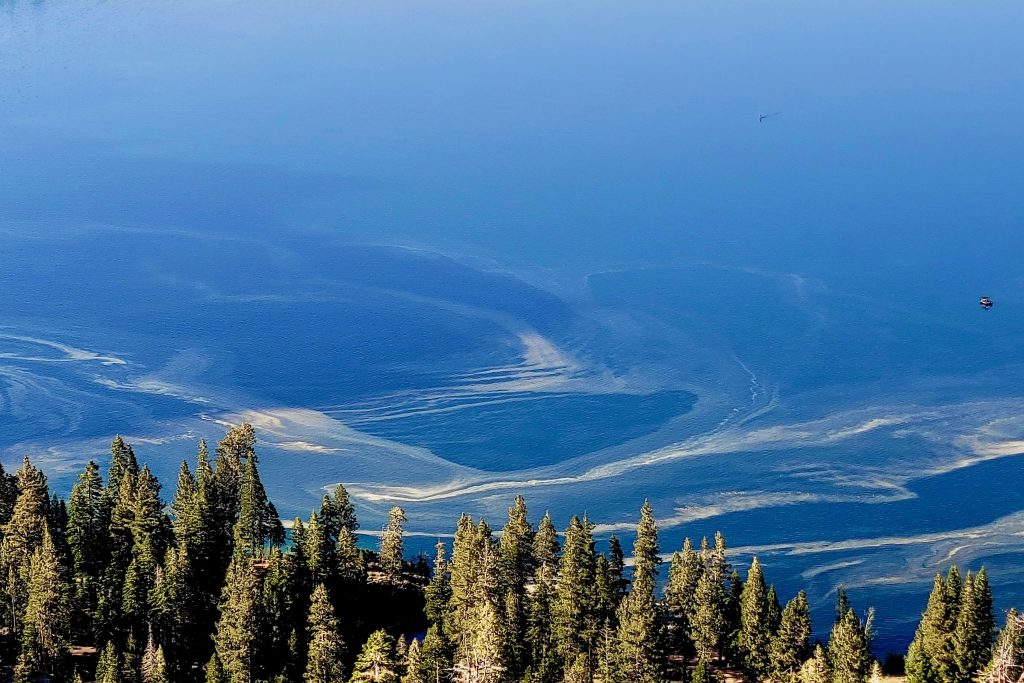
Under a microscope, you can see pine pollen has a “Mickey Mouse” shape. The two “ears” are air sacs that allow the pine to float farther in the breeze, like a balloon. That’s also why it tends to float on the surface of the lake. Pine pollen is also much bigger than other pollen particles, nearly double the size of grass or birch pollen. That’s why it’s so much easier to see them as they accumulate on surfaces.
According to pollen counts from Allergy and Asthma Associates in Reno, last year’s average of tree pollen concentration from May to early June was 99.8 parts per cubic meter of air—moderate to high levels that were also buffered through some rain. The average percentage of pine pollen was 51%.
This year, compared to the same timeframe from last year, the average tree pollen concentration has jumped up to 110.9 pp/m3, with an average of 75% made up of pine pollen.
These data are also collected from Reno/Sparks, meaning that the concentrations of pine are actually higher up in the Tahoe area.
While the typical season for pine pollen can be anywhere between May to July, it’s likely that the light snowpack and warmer weather has contributed to these bigger bursts in pollen. And places at lower elevation are likely seeing more pollen accumulate as winds deposit the yellow-green dust into these areas naturally. South Lake Tahoe, Crystal Bay, Incline Village and Kings Beach typically see more than other areas.
These seasons are a natural part of living in the Tahoe Basin and shouldn’t be a cause for concern. Even for those who have allergies, it’s likely that it’s not just the pines—other trees are also releasing pollen during these seasons, and their smaller pollen particles might actually be the culprit for your runny nose and itchy eyes.
What can you do during “the pollening” to make your life a little easier? Dr. Boris Lokshin at Allergy and Asthma Associates has a few suggestions.
First, keep your windows closed during the peak hours of pine pollen—typically in the mid-to-late morning. If you have air conditioning, you may want to check and replace the filters, which can easily get clogged with the larger pine pollen particles.
As you move out and about, Lokshin recommends masks if your nose and throat are particularly sensitive. Because the particles are large, even a fabric mask should provide adequate filtration. Over the counter, non-drowsy allergy meds like Claritin (also called loratadine) and Xyzal (also called levocetirizine) can also make it easier if you’re outdoors.
Next, he recommends using air purifiers to keep your home allergen free. Showering at night will also remove the pollen from you so you’re not carrying remnants of it into your bedroom.
While it’s a very specific sight to see during these months in Tahoe, peak pine pollen season will come to pass, and will pass much easier if you follow these tips.