LAKE TAHOE, Calif. / Nev. – South Lake Tahoe resident, Nick Speal, doesn’t own a car, relying on biking and public transit to get around. That includes in the winter when he depends on a certain service to utilize those two transportation modes.
“In both cases, I need those multi-use trails to be clear,” Speal said, President of the Lake Tahoe Bicycle Coalition, an organization promoting bicycling and bike infrastructure—all year long. That means advocating for cleared paths in the winter, which is especially essential for those who rely on public transit to safely get to bus stops.
“For a lot of people, it seems like a necessity to have a car, but,” Speal says, “there are quite a few people in town either who don’t have a car themselves or live in a household with more people than there are cars.”
Speal, who also serves on the board of the Tahoe Transportation District, points out that even for those who do have a car, public transit offers an alternative during heavy winter storms when shoveling out a car is back-breaking work and driving can be risky.
What paths are cleared in the winter?
South Lake Tahoe
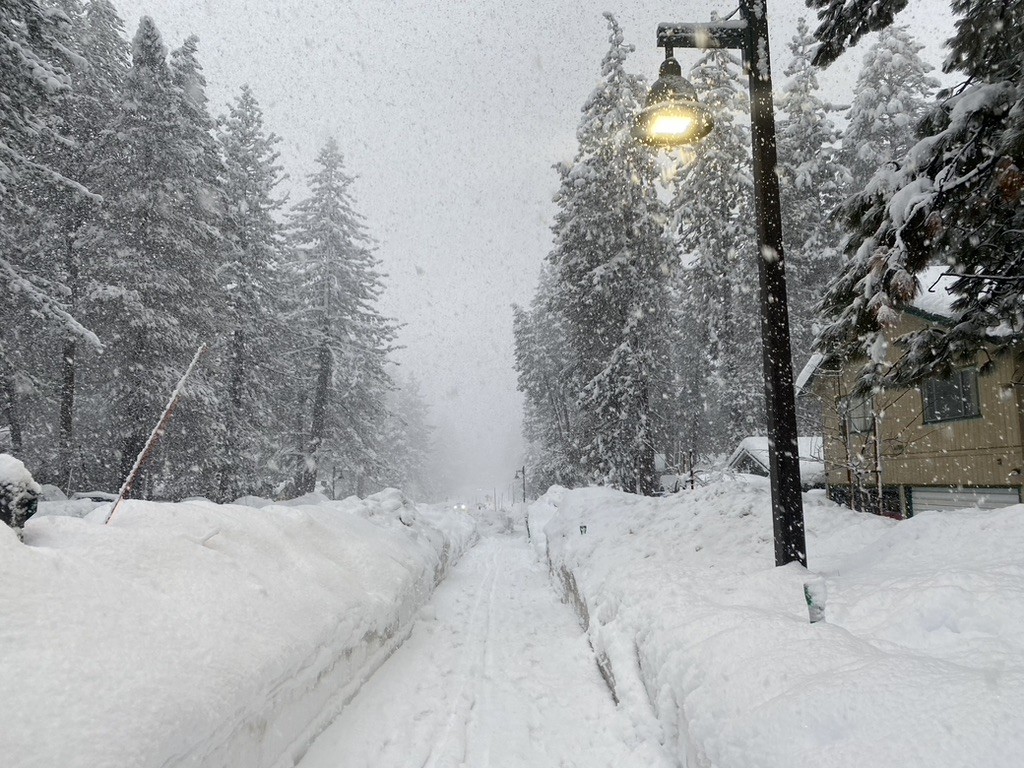
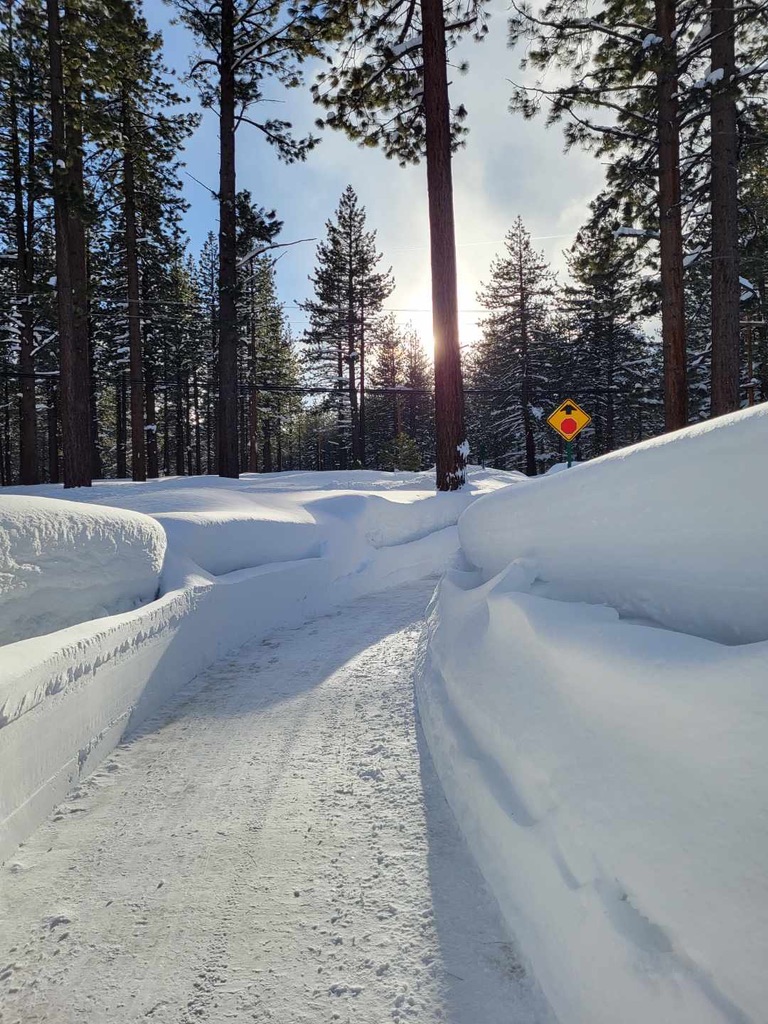
Nearly all multi-use trails in South Lake Tahoe and Meyers are plowed in the winter, in addition to the sidewalks on Highway 50 and Pioneer Trail. This includes the Greenway, the South Tahoe Bikeway, the Meyers Bikeway past Sawmill Pond, and paths along Sierra Blvd, Al Tahoe Blvd, and Ski Run Blvd.
Paths behind The Crossing at the Y are currently closed as a part of the multi-year construction of the Greenbelt.
The City of South Lake Tahoe has a Plow Tracker website that provides updates when plows have cleared both the city streets and bike paths.
North Lake Tahoe/West shore
The Tahoe City Public Utility District in partnership with Placer County clears 16 miles of a 23-mile network, including the Dianne Feinstein West Shore Tahoe Trail, the North Shore Trail, and the Truckee River Trail along Highway 89.
The North Tahoe Public Utility District plows the paths in the North Tahoe Regional Park and down National Avenue to the Tahoe Vista Recreation Area. While the Pam Emmerich trail is not plowed, it is groomed for cross-country skiing when there is enough snow.
Incline Village
Incline Village General Improvement District clears multiple paths throughout the town, including the Ridgeline Park Path from the skate park to the recreation center, the path on Lakeshore Blvd, as well as the tennis and pickleball court paths.
Room for improvement
In Speal’s nine years in the basin, he has seen vast improvements in path access during the winter, especially once the City of South Lake Tahoe took over sidewalk winter maintenance.
“Every year it gets easier to be able to bike around Lake Tahoe,” Speal shares.
While winter clearing on multi-use paths in the Tahoe Basin has come a long way, the coalition’s goal is to push that mark even closer to 100%.
Currently, clearing in South Lake Tahoe stops at the state line. But with many people walking the Nevada Beach and Round Hill Pines area in the winter, there is room for improvement in the Tahoe-Douglas area of the basin.
While Douglas County Parks currently preforms snow removal in the parking lots at the Rabe Meadow Trailhead and the Kingsbury North Trailhead, the county does not currently perform any snow removal on multi-use trails in the Tahoe Basin.
Filling this gap would become all the more beneficial as plans unfold for a multi-use trail in front of Edgewood, connecting lower Kingsbury to the casino corridor.
The coalition is advocating to see Douglas County plow these trails.
“Being able to have a nice path to be able to get to the bus stop really is essential,” Speal says, “especially for people who rely on public transit.”
Partnerships and resources are essential for winter path maintenance.
In South Lake Tahoe and El Dorado County, winter maintenance is paid for through an $18 parcel tax that voters approved in 2000, called Measure S. It’s just a small fraction of what the tax covers. It also goes towards year around bike trail maintenance, playing fields, and other parks and recreation amenities such as the Tahoe Paradise Park. That tax is set to expire in 2030 and will undergo a renewal process before then.
A cost-sharing agreement between Placer County and TCPUD makes clearing possible up north and runs on a priority schedule after three inches of accumulation, and as snowfall, conditions and staff capacity allow.
For visitors, these trails offer another resource to get vehicles off the road and use alternative transportation during their stay.
Beyond getting around, the trails create meaningful recreation, and a unique and serene way to experience Lake Tahoe in the winter.
The coalition provides a map of all the paths that get plowed around Lake Tahoe at map.tahoebike.org.