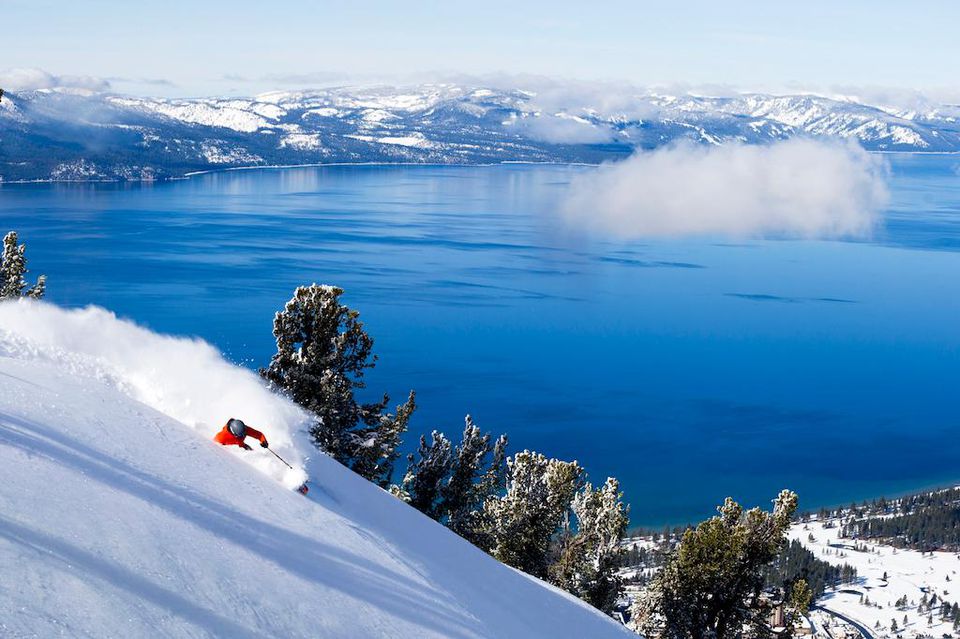
High above the blue expanse of Lake Tahoe, along the ridgeline where California meets Nevada, sits one of America’s most storied ski resorts. Heavenly Mountain Resort, known simply as Heavenly to generations of skiers, is woven deeply into Tahoe’s identity. The resort covers about 4,800 acres and reaches a summit of 10,067 feet, offering sweeping terrain and panoramic views of the lake.
But Heavenly’s current scale belies its modest origins. Before gondolas, lodges, and global recognition, the resort began with nothing more than rope tows, a dirt lot, and a handful of determined Tahoe locals.
The spark: Heavenly’s humble beginnings (1950–1955)
Long before gondolas whisked visitors from Stateline to the mountaintop, and before sprawling lodges and multi-million-dollar expansions, Heavenly began as a small vision shared by a handful of pioneers. Local entrepreneur Chris Kuraisa purchased the modest Bijou ski operation in the mid-1950s, a hillside outfitted with little more than a pair of rope tows and a rental shack. Recognizing the potential of the South Lake Tahoe region, Kuraisa partnered with friends and investors, carefully scouting higher terrain to create a mountain that would captivate skiers and tourists alike.
On December 15, 1955, Heavenly Valley officially opened its doors. A double chairlift carried skiers toward what would become the resort’s signature Gunbarrel run, while a short beginner lift welcomed novices to the slopes. The warming hut was humble, the parking sparse, and the staff largely friends and family, but the view was unlike anything visitors had ever seen. From the summit, Lake Tahoe stretched out like a mirror, framed by mountain peaks dusted in snow. It was this breathtaking panorama that gave the resort its name, and a promise that Heavenly would always be more than just a ski hill.
The mountain that kept growing: Expansion in the 1960s
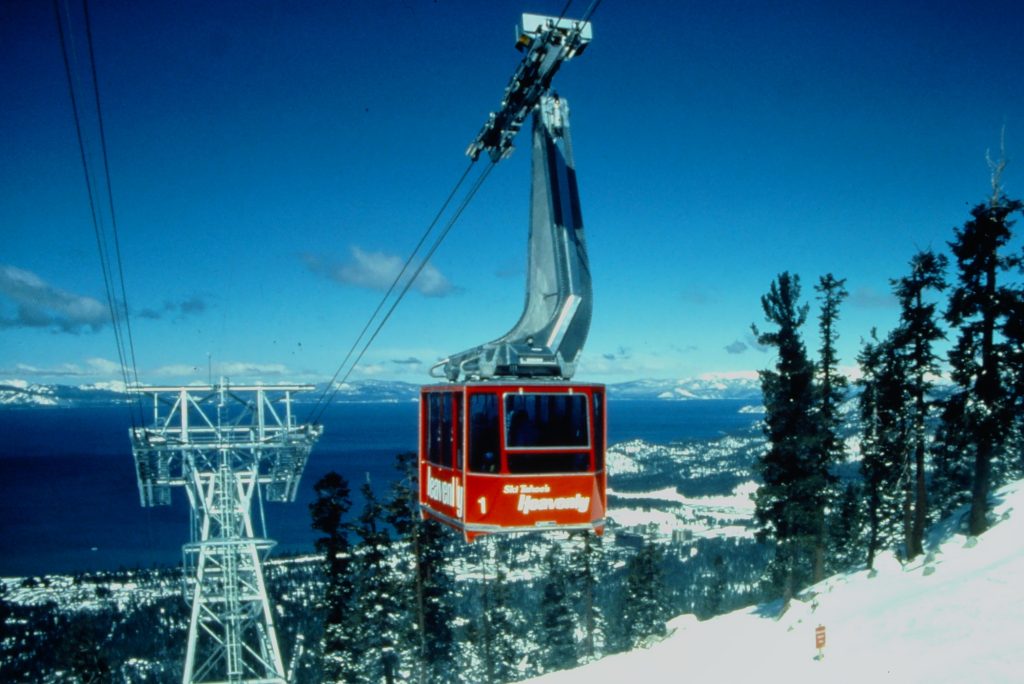
As the 1960s dawned, skiing was shifting from a niche pastime to a mainstream American obsession, and Heavenly grew right alongside it. The construction of the 25-passenger aerial tram in 1962 marked the resort’s first major leap forward. For many, the tram was their introduction to Heavenly – a slow, thrilling ascent that revealed Lake Tahoe’s luminous blue waters and the sprawling mountains beyond. It was not only a gateway for skiers, but a draw for summer tourists, transforming the mountain into a year-round destination.
Expansion into Nevada further established Heavenly’s distinctive cross-state character. New lifts, lodges, and ski patrol outposts opened, doubling the skiable terrain and giving visitors a taste of both California charm and Nevada flair. Signature runs like Gunbarrel cemented the mountain’s reputation for steep, challenging terrain that tested even seasoned skiers. By the end of the decade, Heavenly had grown from a small local hill into a regional powerhouse – an ambitious, exhilarating mountain shaped by visionaries who believed in the magic of Tahoe.
The people who built Heavenly
Heavenly’s history is inseparable from the personalities who devoted themselves to the mountain. Among them was Martin Hollay, a Hungarian-born glove maker whose life became intertwined with Heavenly. From the 1960s onward, Hollay worked on ski patrol, helped cut trails, planted trees, and even assisted in building the resort’s first snowmaking reservoir. In 2002, at age 82, he skied with the Olympic torch when the relay passed through Heavenly, and a decade later, he remained active on the slopes well into his 90s. In recognition of his dedication, the resort named a trail and grove of trees in his honor.
Bob and Patsy Wood were more than investors, they were deeply woven into Heavenly’s soul. Bob, a former naval aviator turned ski pioneer, helped build the aerial tram in 1962 and was a driving force behind the Heavenly Valley Blue Angels racing team. Patsy, beloved for her warmth and generosity, lent her own personality to the mountain – there’s even a run named Patsy’s Run in her honor.
The Killebrew family brought vision and ambition to the resort’s operations. When San Francisco attorney Hugh Killebrew became majority owner in 1964, Heavenly entered one of its most transformative periods. However, tragedy struck in 1977 when Hugh and three employees died in a plane crash, leaving 23-year-old Bill Killebrew to carry the resort forward. Under Bill’s leadership, Heavenly navigated financial challenges and continued to proactively grow, leaving a lasting mark that can still be felt today.
Heavenly in the ’70s and ’80s: Speed, spectacle, and growing pains
By the 1970s, Heavenly had become a stage for both athleticism and entertainment. Freestyle skiing brought acrobatics to the slopes, beauty-pageant competitions added glamour, and World Cup events cemented the mountain’s reputation as a premier destination. South Lake Tahoe itself was booming, fueled by Stateline’s casinos, nightlife, and tourism, creating a lively backdrop for the mountain’s daily rhythms.
But the period was not without challenges. Financial strains loomed as consecutive dry winters reduced natural snowfall, forcing Heavenly to invest in snowmaking and operational efficiency. By the late 1970s, Hugh Killebrew faced the prospect of bankruptcy, laying off staff and preparing filings, only to be saved by a timely snowstorm that revitalized the mountain. Through grit, community support, and a few fortuitous seasons, Heavenly emerged from the decade stronger, prepared for modernization and the corporate transitions of the 1990s.
Changing hands: The era of mergers and modernization
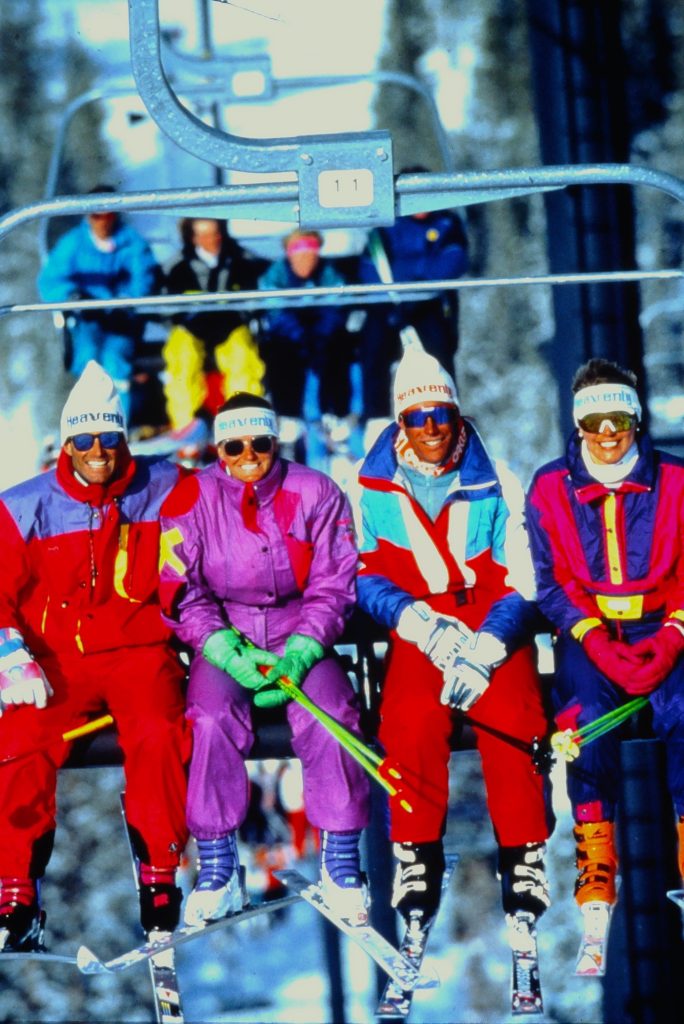
The 1990s ushered in a period of transformation for Heavenly, as the modest ski area of earlier decades first stepped into the era of corporate skiing. In 1990, the Killebrew family sold the resort to Japan’s Kamori Kanko Company. The change in ownership marked a turning point: Heavenly began embracing the vision needed to modernize a major destination resort.
By the middle of the decade, the ski industry nationwide was consolidating, and Heavenly soon found itself swept up in that movement. In 1997, the American Skiing Company acquired the resort, launching a wave of upgrades. From lift improvements to branding initiatives, Heavenly was reintroduced to a new generation of skiers and snowboarders. The resort’s identity evolved, shifting from a homegrown mountain to a polished, internationally recognized skiing destination.
Even as ownership changed and the ski world grew more corporate, the 1990s left a lasting imprint on Heavenly – a decade defined by modernization, introspection, and the shaping of the resort today.
Vail Resorts and the modern era (2002 – present)
The turn of the millennium brought another transformation. In 2002, Vail Resorts acquired Heavenly for approximately $102 million, ushering in a period of unprecedented growth. Under Vail’s ownership, the resort has undergone extensive modernization, positioning Heavenly as one of North America’s premier ski destinations.
Infrastructure improvements have been a cornerstone of Vail’s investment. The resort now features modern gondolas and high-speed chairlifts, improving access between the base, mid-mountain, and summit. Snowmaking coverage has been expanded to ensure reliable conditions even during dry winters, while trail grooming and avalanche control have increased both safety and consistency for skiers and snowboarders.
Guest amenities have also been upgraded significantly. Heavenly now offers expanded dining and retail options, on-mountain lodging, and terrain parks designed for freestyle skiing and snowboarding. Beginner and intermediate areas have been enhanced to provide more accessible learning zones, ski school programs, and family-friendly facilities, making the mountain appealing to a broad range of visitors.
Environmental stewardship has become a central focus for mountain operations. Vail Resorts has implemented measures to protect the Tahoe watershed, including erosion control, sustainable snowmaking practices, and wildlife preservation programs, reflecting a growing industry-wide emphasis on responsible resort management.
Seventeen years after Vail Resorts’ acquisition, Heavenly continues to balance high-end infrastructure, environmental responsibility, and world-class skiing, solidifying its role as a modern, internationally recognized resort while preserving the mountain’s long-standing heritage.
From its earliest days as a modest ski hill to its current status as a major year-round destination, Heavenly has consistently evolved while maintaining the character that made it unique. Over the decades, the mountain has expanded its terrain, modernized its lifts, and improved snowmaking, yet it has always preserved the natural beauty and striking views of Lake Tahoe.
Heavenly’s history is reflected in its trails, infrastructure, and the community that continues to visit and work on the mountain. 70 years after opening, it stands as a testament to the enduring appeal of the region, offering generations of skiers and snowboarders the opportunity to explore a landscape shaped by both ambition and the mountain’s rich, local history.