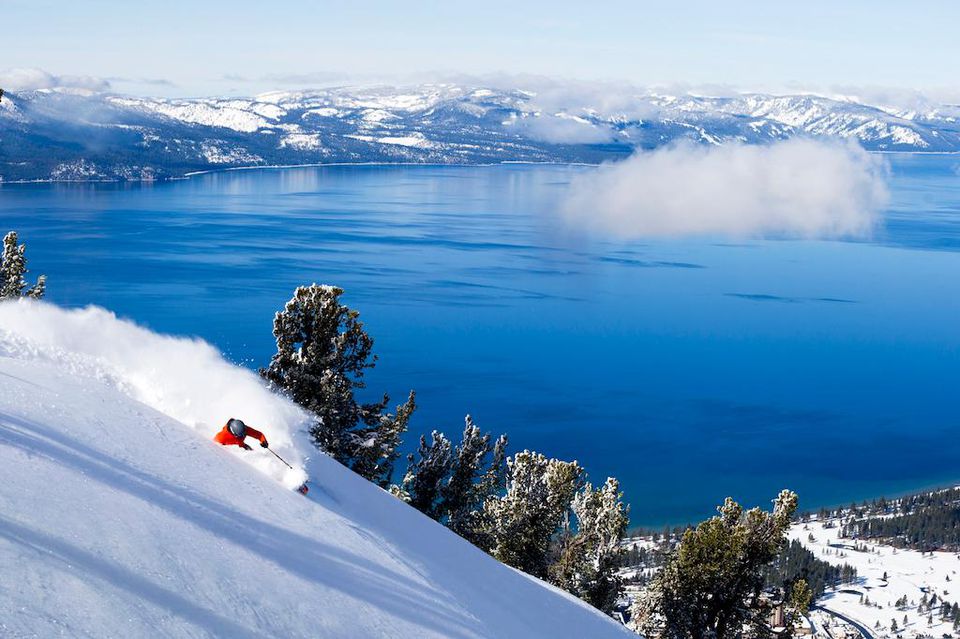
LAKE TAHOE, Calif./Nev. – It’s the Year of the Horse, and horseback riding is one of ways you can enjoy the natural beauty around Tahoe at your own pace. There are plenty of places to ride around the lake—here’s our list of where you can go.
Guided rides
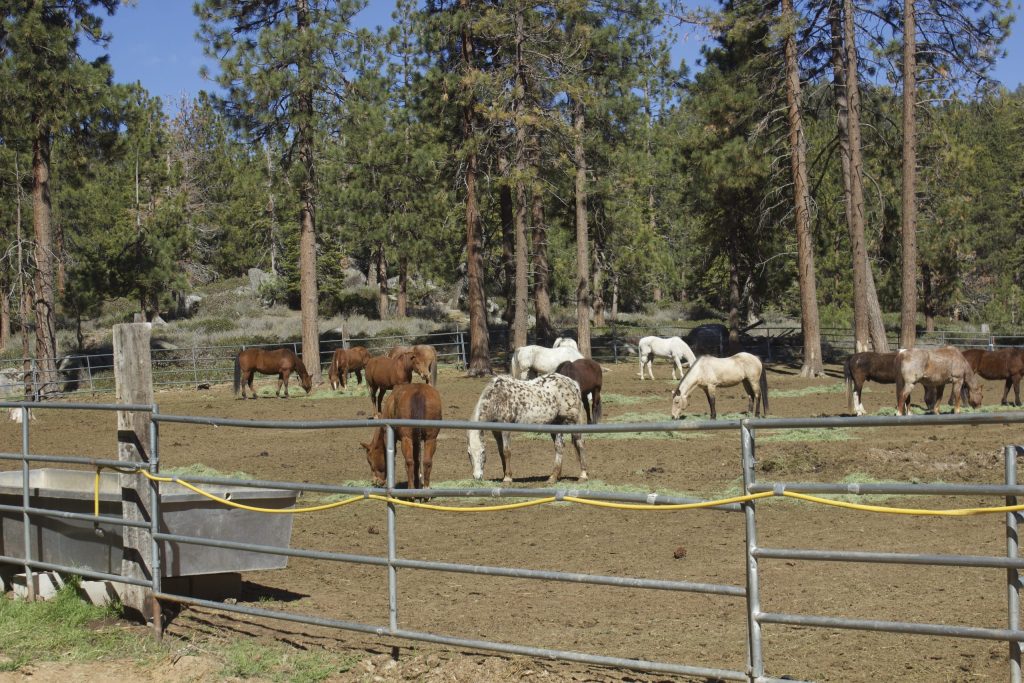
If you don’t have your own horse and want to take a day ride, plenty of stables are available around the basin that provide guided rides.
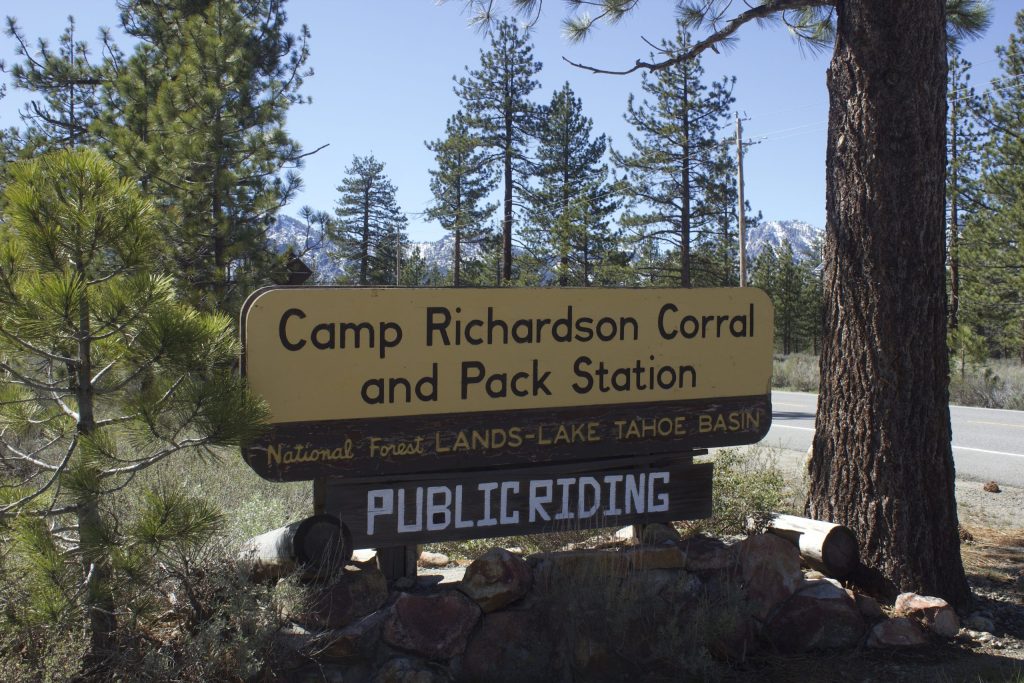
Camp Richardson Corral
Located in South Lake Tahoe, Camp Richardson Corral is one of the easiest to access places that gives you an opportunity to ride on the trails. It offers guided horseback rides through the forest and mountain meadows, with approximately one or two hours rides available. The extended trail rides can take you through trails near Fallen Leaf Lake. They also offer pony rides for children.
Before you go, know that you can’t take water bottles, backpacks, purses, fanny packs or selfie sticks—but you can take a camera around your neck to snap some photos of the views.
The corral has been owned and operated by the Ross Family since 1934 and operates with a special use permit with the Lake Tahoe Basin Management Unit. It operates through the spring starting in May. And when you return from a ride, there’s plenty of activities at Camp Richardson to fill the rest of your day with.
Zephyr Cove Stable
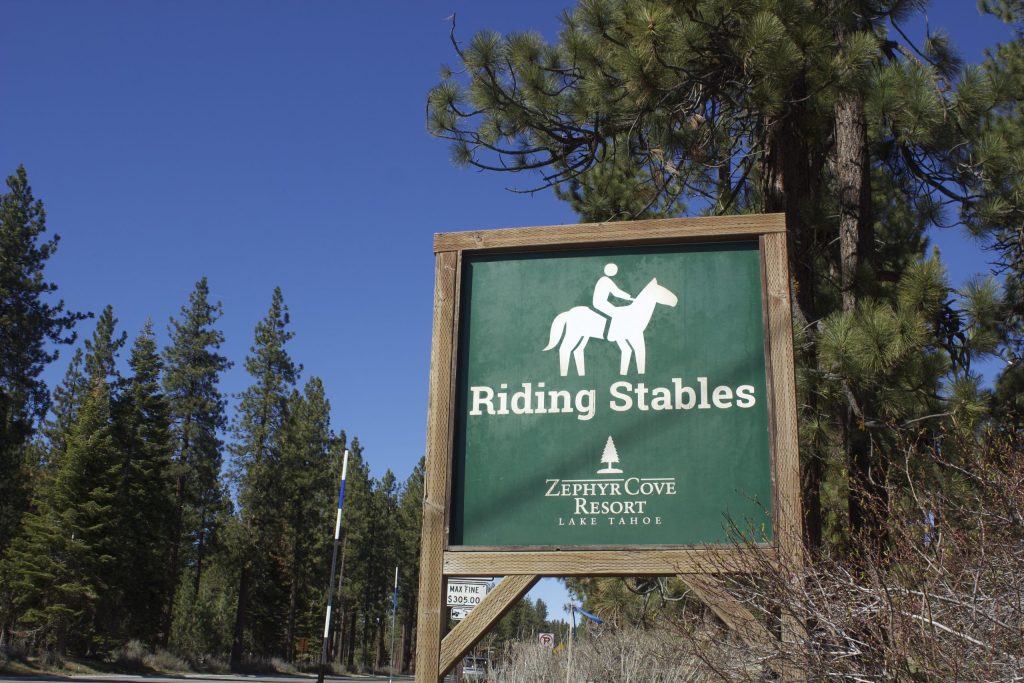
Zephyr Cove Stables are on the east shore, near Zephyr Cove Resort. They offer one or two hour guided rides in National Forest land, allowing you to saddle up for a scenic ride. The family-owned stables have been around since 1987 and offer a meal ride option for breakfast, lunch or dinner—though you’ll need a minimum of ten riders to book meal rides.
They operate starting in late spring from 10 a.m. to 4 p.m., and their hours extend from 9 a.m. to 5 p.m. in the summer.
Alpine Meadow Stables
This scenic site used to be a pack station when Alpine Meadows was known as Deer Park—a rest and refuel stop before hunters would head out into the wilderness. It was purchased by the Courtney Family since 1967 and remains run by their family to this day. Alpine Meadow Stables offers scenic rides around Bear Creek and Mule Ear meadows. They offer one hour rides for first-time riders, as well as private rides and pony rides for kids.
Their two-hour mountain ride follows parts of the Western States Trail and allows you to see Juniper Mountain and high mountain meadows. An even longer half-day ride climbs up through Juniper Mountain and gets you enough altitude to see into Olympic Valley.
While other stables have a weight limit of 225 pounds, Alpine Meadow Stables can accommodate heavier riders as long as you notify them ahead of time. And when you pay, make sure to bring cash, as these stables don’t take card.
Piping Rock Equestrian Center
Piping Rock is one of the newer horse centers in the Tahoe area and is located close to Truckee. They’re open year-round, as they also offer lessons, clinics, a riding academy, boarding and training for horses.
Groups of three or more are treated as a private group, though a group of two can pay an upgrade fee for private rides. They can also accommodate for people over 220 pounds if they are notified ahead of time.
They offer several different rides ranging from Deer Trail to Prosser Reservoir, as well as up to Boca Hill. They even offer a picnic ride, though riders must bring their own lunch. Their rides range in difficulty and time, with the longest rides at approximately two hours. Kids can also do the Ranch Kids Ride, which also includes a trip to the petting zoo.
Tahoe Donner Equestrian Center
If you have a guest card or know someone at Tahoe Donner, the Tahoe Donner Equestrian Center is located near the Alder Creek Adventure Center and allows visitors to ride the Tahoe Donner Trail System. The center strongly recommends helmets and will allow riders to borrow one for free. You can book trail rides later into the season and pony rides for children aged 2-6.
Public riders may spend time at the equestrian center as well with their own horses. If you ride your own horse, you can also board your horse at the center by reserving a spot in advance. Or, if you just want to ride with your own horse, you can park your trailer at the south end of the adventure center or on the street.
Tahoe Donner’s summer map indicates which trails are multi-use and which ones are hiker/equestrian only, which include Giddy Up, Buckaroo, Rawhide and Yeehaw up near Euer Valley. But as long as your horse is used to trail riding, there’s a wide variety of trails to take. Plenty of the trails pass near creeks and peaks and even through Forest Service land. Pay attention to the private parcels and golf course as you ride, but there’s plenty of space and access to beautiful lands.
Riding with your own horse
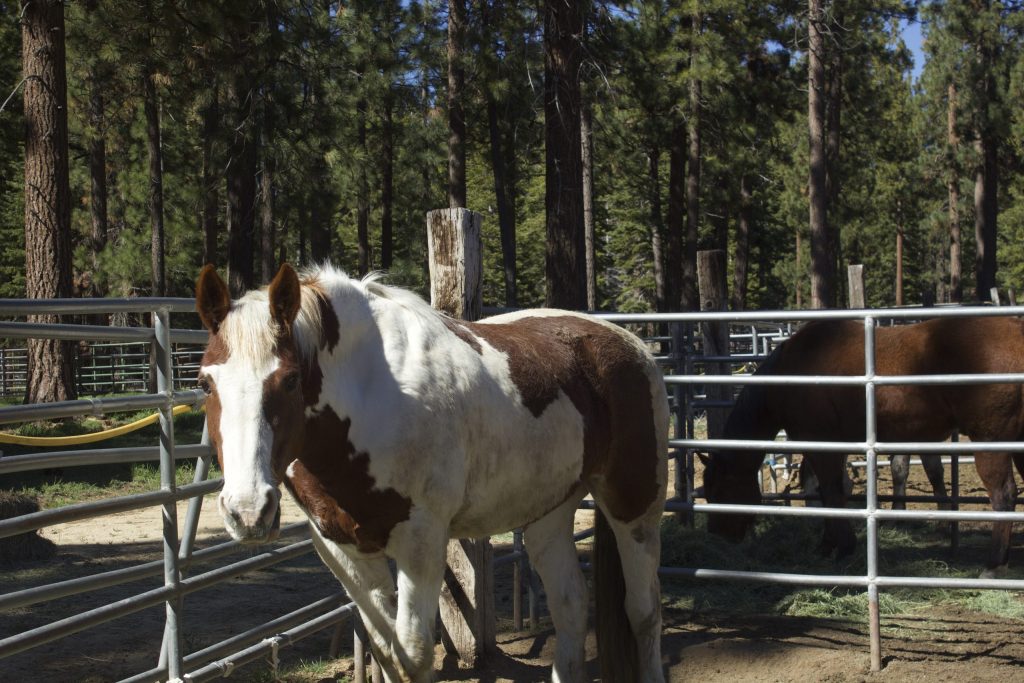
If you’re an equestrian and have the opportunity to bring your own horse, there’s places around the basin to saddle up and head out on your own into the backcountry.
Deanne Del Vecchio and Shawn Mainville are two riders who gave tips on where and how to ride. Del Vecchio is a lifelong outdoors enthusiast who has been trail riding and in the backcountry for most of her life. Mainville, along with two other riders in the Sacramento Calvary, rode the entirety of the Tahoe Rim Trail in 2019.
Tips on riding in the backcountry
Mainville said, “You’ve got to prepared for the backcountry experience and the upkeep of both yourself and the animals.”
“Any horse can be adapted to a good trail horse,” said Del Vecchio, “But the best trail horse is the one that’s the safest and the one you trust.” She complimented her horse for his sure-footedness and ability to adapt to obstacles such as boulders or fallen trees.
Del Vecchio and Mainville agreed that most horses can be trained for trail riding, but it’s good to bring an animal familiar with the terrain, especially crossing water or handling elevation. “Horses are amazing animals, but they can absolutely have a crazy out on a trail, so you want to have a horse familiar with such a large adventure,” said Mainville.
Not only that, but bikers, hikers and dogs can be out on the trail—not to mention bears. Bring some bear spray just in case (though you shouldn’t try to spray from atop your horse.)
Del Vecchio cautioned that granite trails around the region can be tricky for horses to get their footing on. “If your horse has metal shoes, that can slip on the granite, and if you lose a shoe, your horse may present lame—so be cautious about where you ride.”
As someone who volunteered with Search and Rescue, she also recommended bringing water (and a collapsible bucket to get water for your horse), food, jackets and a first aid kit. “You never know when someone might need it—even other people on the trail.”
“It’s pretty hard to haul out people from some areas in the backcountry, and it’s even harder if you’ve got a hurt horse,” said Del Vecchio. “That’s why you should be prepared, know what you’re dealing with and have a plan.”
Mainville also recommended bringing a saw for cutting down cross-trail trees, as well as paying attention to the rules for fire and permits. “If you’re doing a trip the way we did, you can’t cook over an open fire and there are specific rules and permits you should check before you travel.”
If you’re riding for more than a day and camping, like Mainville and the rest of the Calvary did, he says it often gets easier after the second day—but make sure to take it easy and have some zero days for your horse (and pack animals) to rest.
Both of them praised the trails around Tahoe. “Compared to some other places, they have beautifully created trails, which is awesome,” said Del Vecchio. With her experience mountain biking, she says that some of those trails are also excellent horseback riding places.
“Even getting your feet wet with just a couple sections at a time is great,” said Mainville. “There are such beautiful places to see, and they should be accessed and utilized as much as they can.”
Donner Lake Rim Trail
A project from the Truckee Donner Land Trust, the multi-use trail will eventually be 23 miles, but currently has about 12 miles available for public use. If you’re riding from Tahoe Donner, you can access the trail from the Glacier Way trailhead to the Johnson Canyon overlook.
But the best entrance for all equestrians is Castle Peak. Start from Castle Valley Road and you can park where space is available near the green Forest Service gate. A half mile from the kiosk is the prominent fork for the DLRT. Turn right at the fork and you’ll take a route that rides to Trout Creek trailhead, riding west to east.
The 13.1 mile point-to-point trail is considered challenging with an elevation gain of 2,326 feet, taking a little under 6 hours on average to complete. However, it’s open year-round and has some absolutely stunning views.
Be aware that there’s a lot of granite after the Warren Lake Trail, so bring a horse that can navigate the “staircase” around the area. Mainville said, “It’s a lot easier for people to walk on certain depths of steps, which can be harder for horses to navigate—it’s easier for them when there’s a longer rise.”
Along the trail you can see Summit Lake, marking the five-mile point to Trout Creek. Beyond that point is a 700 foot ascent through Johnson Canyon through switchbacks, where colonies of Braken Fern and seasonal wildflowers can be seen.
Spooner Lake
Spooner Lake and Backcountry State Park lets you see both Spooner and Marlette Lake, two alpine lakes within the Tahoe Basin. The Nevadan state park features backcountry camping and cabins, with fishing spots at Marlette Lake. While you pay fees for parking and camping, there’s a variety of trails that can be hiked.
This year, Nevada’s Division of State Parks has closed some trails to repair Marlette Dam, continuing work from last spring. Normally, North Canyon Road and Marlette Lake Trail are sweet spots for equestrians.
However, the Tahoe Rim Trail remains open for riders—and it’s one of the most stunning. The trail has steep elevation gain and some technical sections with boulders and drop-offs, but allows you to see above Lake Tahoe and Marlette Lake. At the highest point, on a clear day, you can even see into Washoe Valley.
“It’s captivating and awe-inspiring,” said Mainville. “You can’t help but feel the emotion and power of those views.”
Some of the trails can be narrow or on exposed ridges, so having a sure-footed horse who’s not easily spooked by heights is a must. While there’s a pump at Marlette Campground, Spooner Lake is the only sure spot for water, so make sure to keep your horses hydrated.
Spooner to Snow Valley Peak is another section you can ride, which Del Vecchio says is “just incredible” and an easy day ride.
From the connection on the Tahoe Rim Trail, you can ride from Spooner to Kingsbury Grade with a switchback trail above the highway—make sure you have plenty of space to head down.
Tahoe Rim Trail
Only one portion of the Tahoe Rim Trail does not allow horses, but the rest of the 165 miles are equestrian-friendly. You can still saddle up and bypass the trail section that doesn’t allow horses by riding on Relay Peak Road and Mt Rose Highway/Highway 431.
“With all the highway crossings to access the Tahoe Rim Trail, it makes it really easy compared to other backcountry places in the Sierra that take several days to drive to,” said Del Vecchio.
The trail allows you to experience some of the great sights near Cinder Cone Peak, Star Lake, Big Meadow and Echo Summit—but it’s a challenging ride in some areas. Big Meadow to Echo Summit, Echo Lakes to Barker Pass and Brockway Summit to Mt. Rose Summit all have granite paths that might be challenging for some horses. Kingsbury to Star Lake in particular can be challenging for equestrians given the narrow pass and the granite.
Areas near Deer Creek can show you lava flows and volcanic rock. Horses can ride over it, but it can be a little tough. However, it gives you a chance to spot wagon ruts from the Gold Rush, leaving quite the historic mark.
The trail from Kingsbury Grade South to Big Meadow, as well as Tahoe Meadows to Spooner Summit North are popular trails to ride given their views. You can also access Freel Pass through the TRT. Mainville says, “It has some of the most impactful 360 degree views. On a clear day you can see South Lake Tahoe, crystal lakes, and if it’s really clear, straight out to Reno.”
“Big Meadow is otherworldly in wildflower season. It’s beyond belief,” said Del Vecchio. In the fall, she also recommends Marlette Lake and Showers Lake.
Pay attention to which parts of the trail have mountain bikers riding—Tahoe Meadows to Spooner Summit North has bikes crossing on even days between intersections.
Mainville recommends a day ride at Barker Pass, which can be driven up to by Tahoe City. You can ride a section of Granite Chief, which comes out onto a ridgeline between two mountains.
Pacific Crest Trail and the Tahoe-Yosemite Trail
The section from Lake Tahoe to Mt. Whitney is often called the “the crown jewel of the PCT” and shouldn’t be missed if you can ride it. The entirety of the trail is accessible to equestrians, but may require you to pay permits to the USFS within certain sections. Tahoe City or Summit City Canyon are some of the easier places to hit the PCT and will offer excellent views throughout the region. If you’re riding from the south shore and want to hit the TYT, you can start at the Meeks Bay Trailhead.
“You just can’t get much better than Tahoe for views,” said Del Vecchio. She recommends a summer ride near Kirkwood to get to Carson Pass. You can access Winnemucca Lake along the way for the Pacific Crest Trail, which is a classic hike near the Tahoe-Yosemite Trail diverge. Travelling along the trail can be windy, so prepare some layers. Along the way you’ll be treated to great view of wildflowers if you hit it at a good time.
“When you ride out here, you gotta remember there are glimpses of the lake all around the place,” said Mainville. “Tuning into the needs of those animals is something I really appreciated with the guys that I rode with. If I had the chance to ride the whole TRT again, I would do it tomorrow, no problem.”
“Riding gives me a sense of freedom and accomplishment,” said Del Vecchio. “There’s a sense of exploration riding in the backcountry, and the camaraderie between horses and people is just amazing. We’re in total awe of what our horses can do.”
Editor’s note: This article originally appeared in the Summer 2026 edition of Tahoe Magazine.