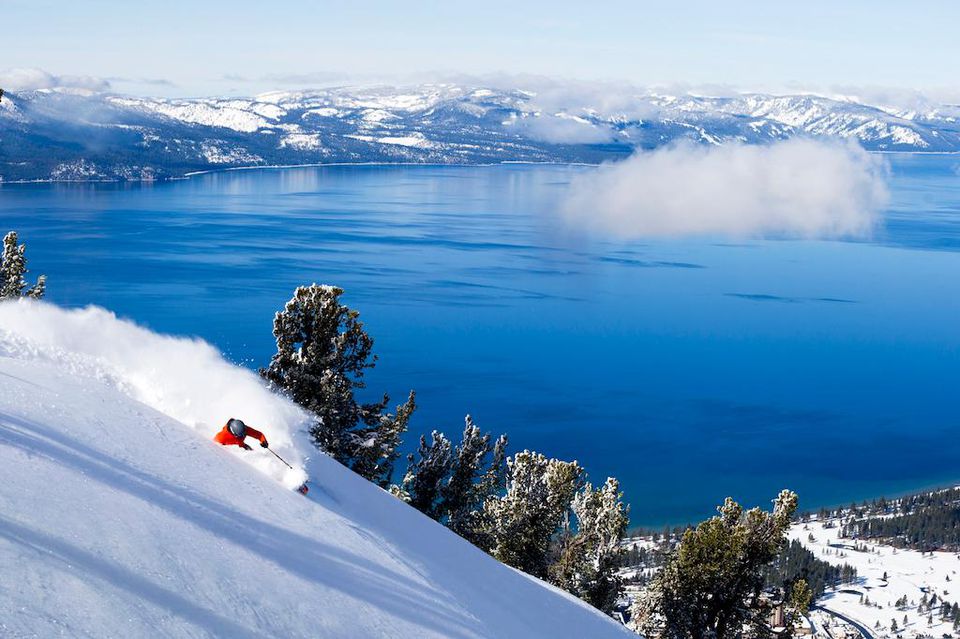
INCLINE VILLAGE, Nev. – With the turquoise Sand Harbor waters in view, professional climber Tommy Caldwell addressed the 30th Tahoe Summit in the park’s amphitheater on Wednesday, Aug. 19, sharing his experiences, journey to Tahoe, and environmental message.
Widely considered one of the best climbers in the world, Caldwell is known for completing the first-ever free climb of El Capitan’s Dawn Wall in Yosemite, Calif., in 2015. No stranger to fear, he endured a hostage situation after climbing in the Kyrgyzstan mountains in 2000 at the age of 20, running 10 miles after days of little food and water to escape.
Shortly after, he lost his left index finger in a table saw accident in 2001, after which he not only re-learned to climb, but became famously known for climbing harder.
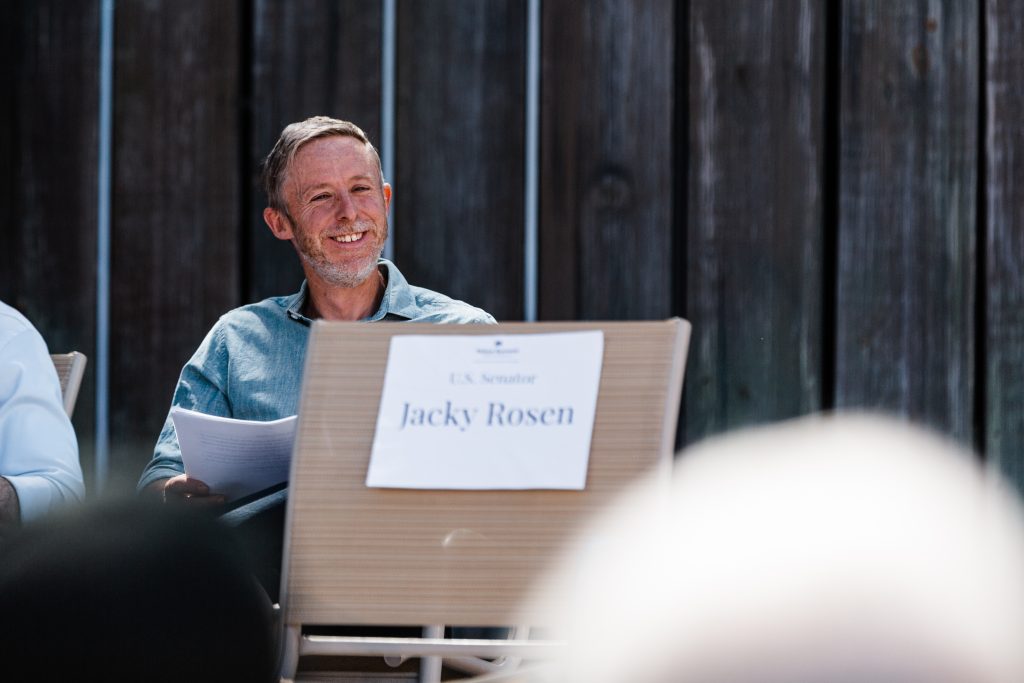
“Fear and inspiration are central pillars of what makes Tommy, Tommy,” Senator Jackie Rosen said, introducing him to the summit.
When not climbing, Caldwell regularly visits Washington, D.C., advocating on behalf of organizations, including Protect Our Winters, the Wilderness Society, Access Fund and the National Park Conservation Association.
Having recently moved to Tahoe, he shared that he saw the invitation to speak at the Summit as an opportunity to expand that work to his new home and learn from those at the top.
“But then I looked at the event and started to see the list of invitees and past speakers, movie stars, presidents, other keynote speakers,” he expressed. “I started to have a little bit of trepidation, honestly.”
Laughing with the crowd, he recalled asking, “Are you sure you want a dirtbag climber to be your keynote this year?”
“They assured me, yes, they do want me,” he added. “So, here I am.”
The 47-year-old climber shared his experience in the U.S. capital, discussing the sacrifice and hard work he’s observed among public officials there.
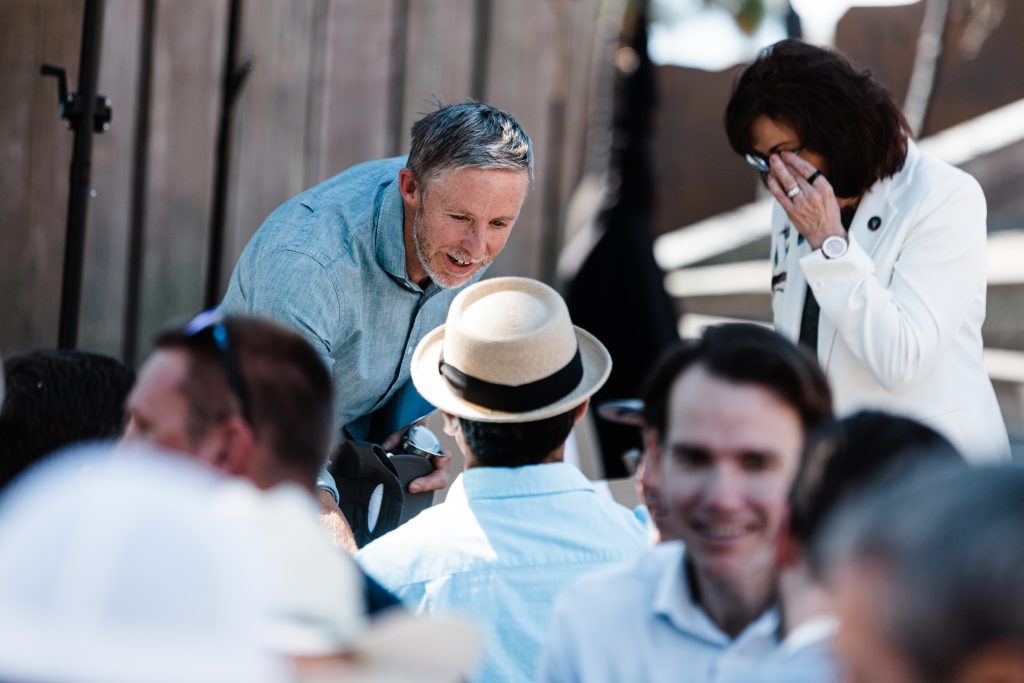
“People think that rock climbing and climbing the biggest mountains in the world is a grind. Just try walking the halls of Congress and doing what you’re doing,” he expressed nodding to the public officials on stage next to him, which included, U.S. Senators Jacky Rosen (D-NV), Catherine Cortez Masto (D-NV), Adam Schiff (D-CA), Alex Padilla (D-CA), and U.S. Representatives Mark Amodei (R-NV-02) and Kevin Kiley (I-CA-06). Also on stage were Washoe Tribe of Nevada and California Chairman Serrell Smokey and Nevada Gov. Joe Lombardo.
Raised in the Colorado mountains, Caldwell recently moved to Lake Tahoe. He said his decision to move to Lake Tahoe was strongly influenced by his good friends, Corey and Marina Rich, longtime Tahoe locals who have tried to convince him to move here for about 20 years.
“I’m sorry it took me so many years,” he said, “but I can now say after being a Tahoe resident for two years, that besides probably marrying my wife and having my two kids, Fitz and Ingrid, moving here to Tahoe was the best decision we ever made.”
Later, he described it as a place that seems to have it all, from modern amenities and nature escapes, just 30 minutes away by bike, to refreshing, clear waters surrounded by the mountains. “There’s nothing else quite like it,” he expressed.
Caldwell shared how his perspective of the mountains has changed over the course of his life.
“When I was young, those mountains seemed immovable, so mighty, but as I grew older, I started to realize their fragility,” he said, listing receding glaciers, diminishing permafrost, and rock faces he’s aspired to climb occasionally falling down.
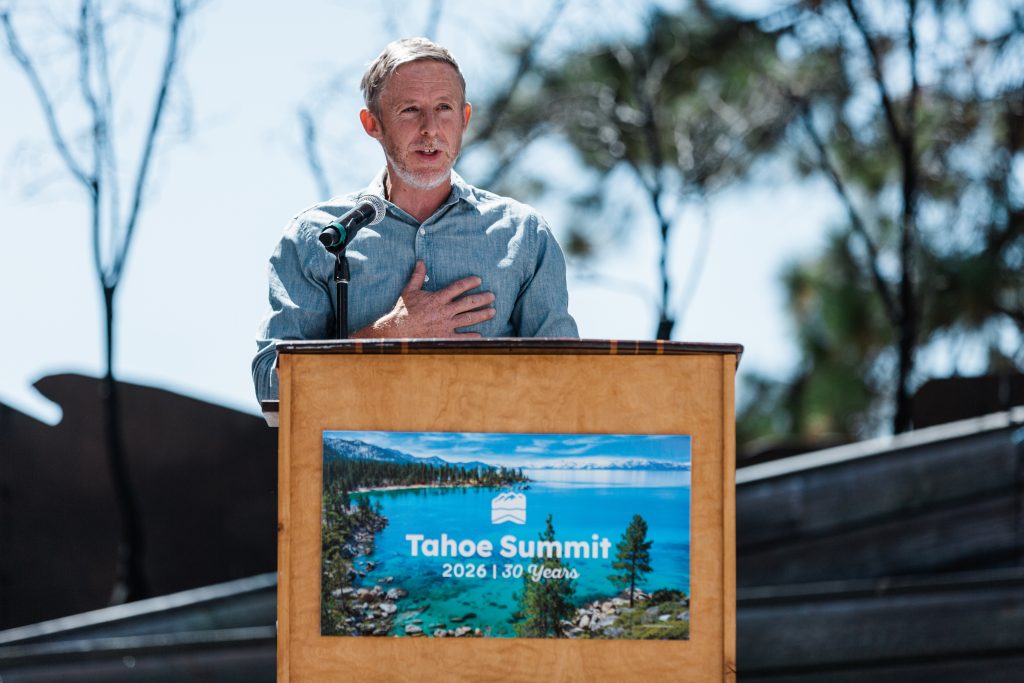
The realization has fueled his environmental work and fervor. In one project aimed at influencing legislation for the old-growth Tongass National Forest, he biked from his then-home in Colorado to Alaska in a process he calls ground-truthing. “If you want to protect the place, you need to first love it,” he explained. “And to love it, you need to know it.”
Documented in a film called The Devil’s Climb, he said that by combining a human adventure story and sprinkling in environmental issues, what he described to the summit as “hiding the vegetables,” something he endearingly does with his kids, he hopes he can get people to care enough about a place to get involved in protecting it.
Biking his way in this project, he said, gave him an unexpected perspective. “When you’re not flying directly to your destination, you begin to realize that those protected and remote regions are actually relatively small pockets among a vast landscape that has been deeply affected by humans.”
He witnessed oil rigs, no-trespassing signs, pronghorns crumpled over barbed-wire fences, forests being clear-cut, and other sights, but he said, “the most heartbreaking part for me was the struggling communities.”
He witnessed both substance and domestic abuse, and a highway called the Highway of Tears due to the indigenous women who had been kidnapped or gone missing there.
“I went on the trip hoping to be inspired by nature. Instead, I was heartbroken by its destruction,” he said, comparing it to a childhood tale. “To me, it felt a lot like Lorax. We cut down the trees and human suffering follows. Luckily, our story here in the Sierra Nevada is quite a bit different.”
He acknowledged the Lake Tahoe area’s hardships, including stripping the basin of trees, impacting clarity and displacing the Washoe people.
“But luckily, there’s been enough people that care enough about this place to bring it back.”
He pointed to the blue lake, the trees, the towns and the communities.
“Let the story of Lake Tahoe remind the world that while humans have the power to destroy,” he said, “we also have the power to restore.”
He noted that Tahoe’s existence as a wilderness destination, intertwined with people, offers a chance to be inspired by nature. “And just maybe,” he said, “if we are smart, we can trick some of them into caring enough to keep doing the work that protects this place.”
In closing, he made two more points: first, to look to Indigenous leaders in caring for lands and waters, and second, that environmental protection work is never done.
“The forces working to destroy are always present and powerful, so we need to outsmart them,” he said, ending with, “So, let’s keep the good work going.”