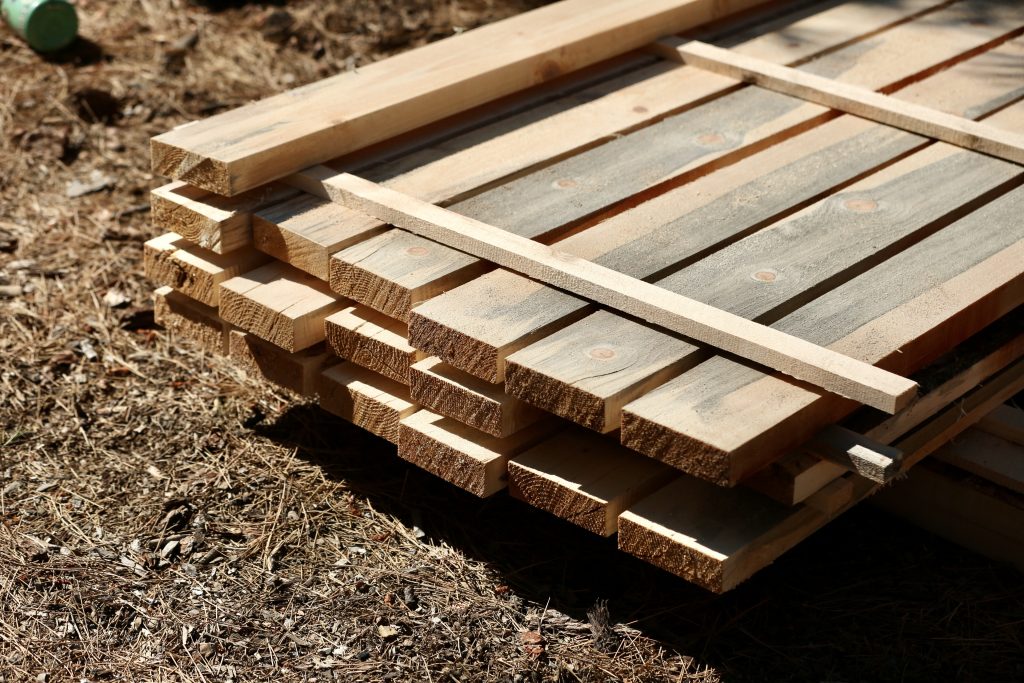
SOUTH LAKE TAHOE, Calif. – The smell of pine grew stronger with each cut at a sawmill demonstration at Lake Tahoe Community College on Thursday.
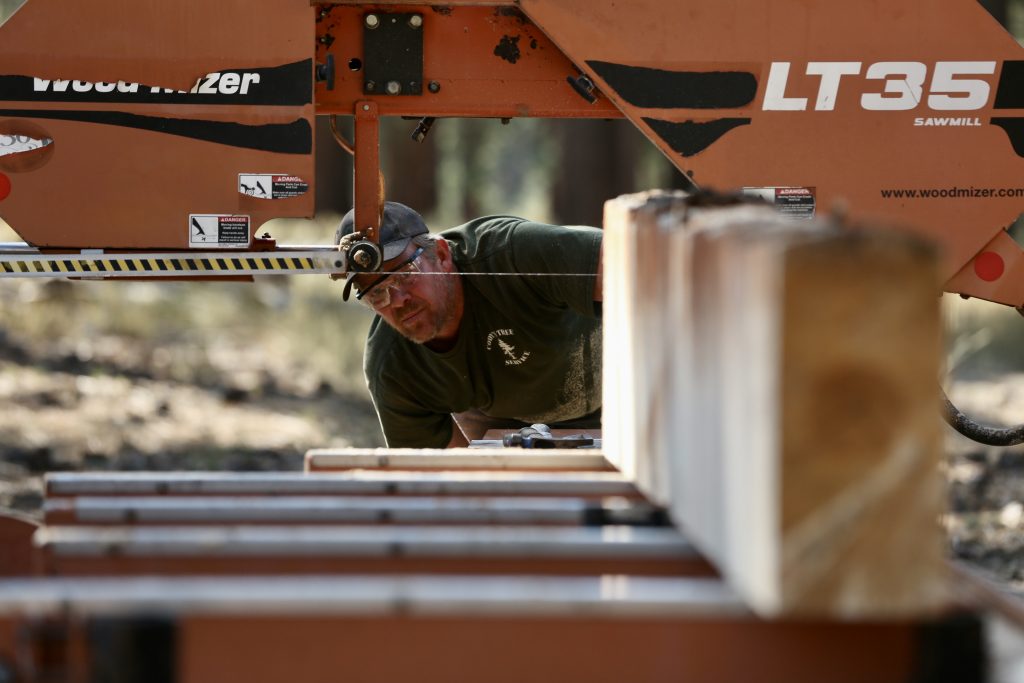
The demonstration is part of a new initiative, called Tahoe Wood, which aims to boost local wood utilization to bolster forest health, reduce wildfire risk and support the local community. The initiative, which started earlier this year, is a collaboration between the Tahoe Earth Institute, Tahoe Prosperity Center, and Berkeley Wood Lab. Other demonstration organizers include the Tahoe Regional Planning Agency (TRPA), Lake Tahoe Community College, South Tahoe High School, Cody’s Tree Service, Sierra Business Council, and Tahoe Resource Conservation District.
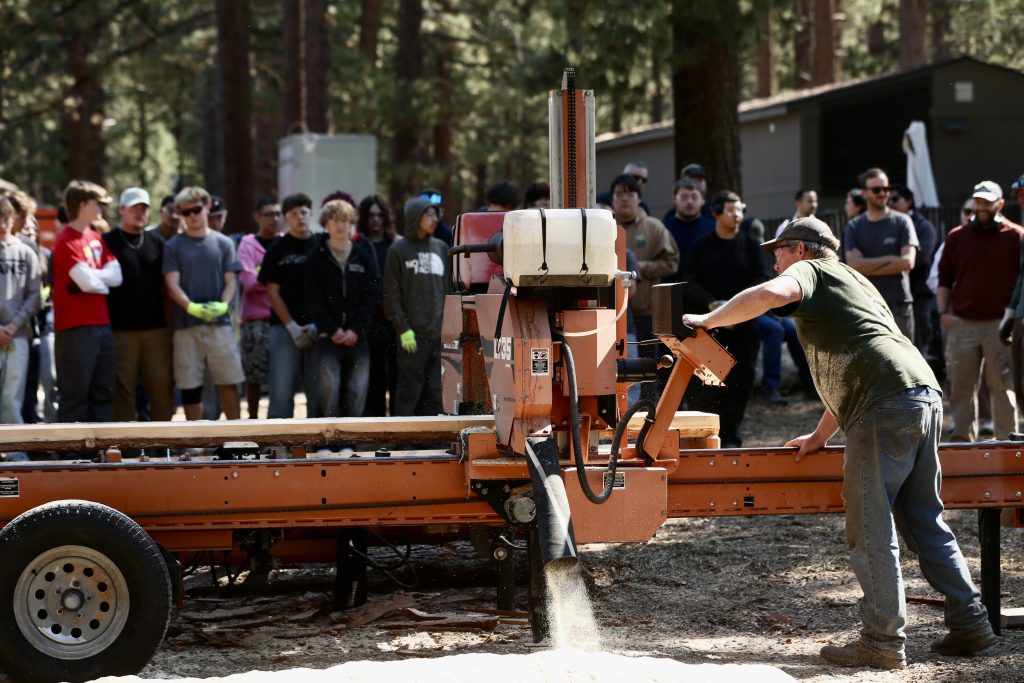
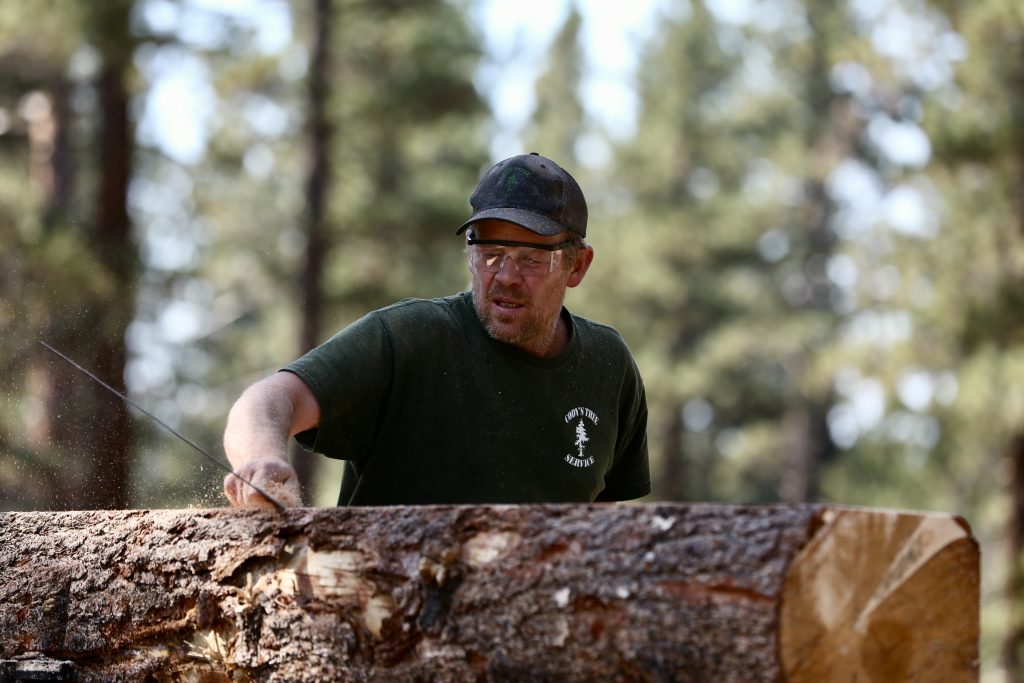
In one of four demonstrations throughout the day, a crescent moon of high schoolers, college students and other participants surrounded the portable sawmill and watched as its operator from Cody’s Tree Service transformed trees into two-by-six-inch boards.
The logs came from the campus’s currently under-construction public safety complex and the resulting boards are destined for a bus shelter not far on US-50 and Modesto Avenue.
As part of the South Tahoe High School’s Career & Technical Education program, students will build a bus shelter planned for completion in the spring. The project is funded through California SB 125, which provides funding for transit capital and operational needs.
One demonstration participant, 18-year-old Breslin Hambel, who was born at Barton and grew up hiking and climbing in the area, said the demonstration opened his eyes to the resources around his hometown.
“It’s a good thing,” the South Tahoe High School student said, “being able to use our resources around here instead of collecting them from other areas, when we have the resources right here [and can] put them to use and make our community better.”
Erika Veidis of Tahoe Earth Institute explained that after the age of clearcutting in Tahoe during the Comstock era, “We’re finding ourselves on the other side of the spectrum, where there’s not enough industry to support restoring the forests that now need to be thinned.”
With over 100,000 acres in the Tahoe Truckee area targeted for thinning, the Tahoe Wood initiative aims to make the process more sustainable.
Veidis said what is striking about the current lumber industry is that an estimated 80% of lumber products in California are imported from out of state, “something that’s hard to believe given the scale of forest restoration efforts not just across Tahoe, but statewide.“
Roughly a million acres are targeted for high-priority treatment across California every year, according to California’s Wildfire and Landscape Resilience Action Plan.
One challenge Veidis and Tahoe Wood have identified is the time and expense of hauling wood off the landscape following treatment.
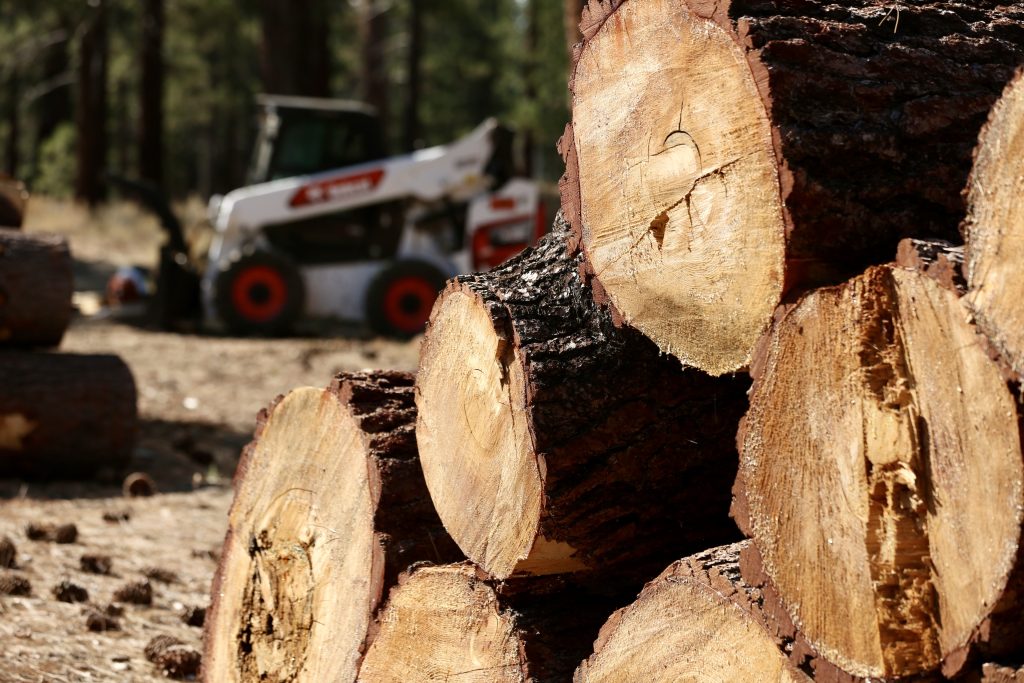
“This can bottleneck forest restoration and wildfire risk mitigation efforts,” Veidis said. “I’ve seen forest and fire agencies locally having to apply for grant funding just to cover transportation costs of hauling away forest waste – not to mention the time costs of making these trips.”
Trees felled in the Tahoe region are typically hauled 70 to over 100 miles away.
With diesel prices soaring over $8 in the Tahoe Basin, Mike Vollmer, Executive Director for the Tahoe Resource Conservation District, said at the demonstration, “transportation of this material is getting to be close to impossible, and still be able to recover something on the other end.”
At times, the masses of wood from these treatments are left in piles to burn later.
Vollmer went over all the different uses wood from these treatments can have, and that the “lowest possible use is pile burning in the woods.”
Other uses include firewood, conversion to electricity through bioenergy facilities, and its highest use as material to build products like fences or tables.
But to attain these other uses, it again goes back to transporting wood off the landscape.
Tahoe Wood and partners believe a better way is to keep things close to home, which helps address these challenges.
“Using this resource as close to where it grew as possible is probably the best idea,” Frank Cody said at the demonstration, owner of Cody’s Tree Service. “I think that we can do the right thing for the trees while also using the resource rather than wasting it.”
A shift has started in this direction with a number of new wood and biomass processing facilities developing across the region, including the Tahoe Forest Products sawmill in Carson City, the Alpenglow Timber sawmill in Truckee, and the Northstar Community Services District Wood Energy Facility.

“Even so,” Veidis said, “we’re still currently facing an excess of wood that has nowhere to go.”
Challenges in meeting these needs include the costs and start-up timelines of larger industrial-scale facilities, which often take millions of dollars and years to get running. Smaller wood operations are cheaper and quicker to start up but lack economies of scale.
The Tahoe Wood initiative hopes to address this locally through a few strategies.
“First of all, we’re networking and raising visibility for the smaller wood businesses that already exist,” Veirdis said, “from tree to log to end product, recognizing that together, many players can have a large collective impact”
Veidis says finding ways to transform this forest byproduct into locally usable materials not only helps the forests and reduces waste, but also benefits the community in other ways, including creating jobs, supporting businesses, and generating revenue that stays local.
Drawing inspiration from regenerative community food systems, Veidis says, “In the same way that it can be important to ‘know your farmer,’ I think it’s also important to ‘know your trees.’ If we know where our trees are coming from, who’s milling the logs, who’s building with this lumber, who’s making our furniture, and so on, we can support the partners and businesses that are helping keep our forests healthy and our communities resilient.”
To support that goal, Tahoe Wood created a directory where people and businesses can navigate the regional wood economy and find local wood-related businesses, including harder-to-find services like lumber inspection and grading or kiln drying.
“For this work to continue to build,” Veidis says, “our region needs effective collaborations, innovation and entrepreneurship, workforce development, funding, and outreach and communications that tell the story of why all of this is important.”
To learn more about the Tahoe Wood initiative, visit tahoeearthinstitute.org/tahoewood.