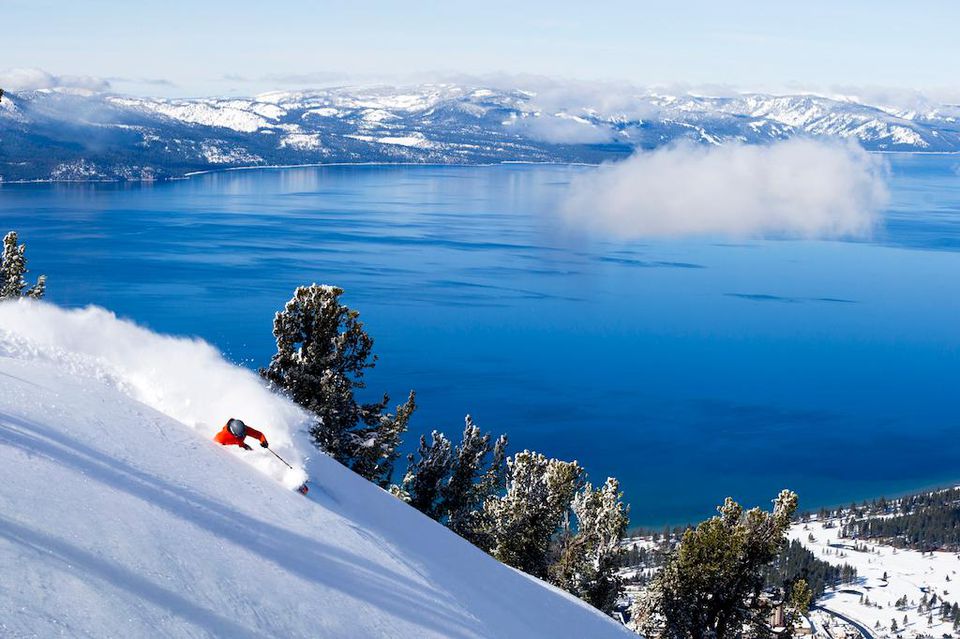
WASHOE COUNTY, Nev. – A skier is alive and uninjured after a near-miss in the backcountry Sunday morning, Nov. 15, when they triggered and were swept in an avalanche around 10:30 a.m. in the Mount Rose Wilderness, north of State Route 431.
As reported in the skier’s avalanche summary with the Sierra Avalanche Center, the unidentified skier was carried approximately 150 feet before coming to a rest, buried thigh-deep in an avalanche.
The skier had just descended a slope in the backcountry without observing signs of recent avalanche activity or snowpack instability. The skier said they were on their way to ski another lap, traversing a slope, when they triggered the avalanche.
Their summary reports they stayed near the surface during the slide and were able to free themselves from the debris.
The avalanche occurred mid-slope on a ridge between Broken Glass and Hourglass on the north-facing side around 9,300 feet.
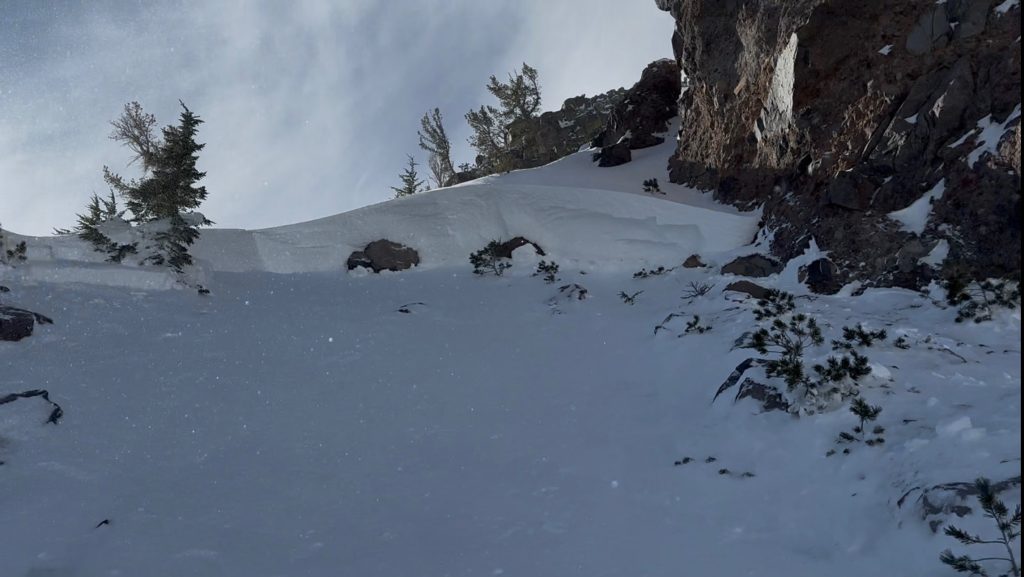
As described in the report, the avalanche started about 30 feet upslope from the skier and spread widely across the slope. The skier shared that the deepest part of the crown, or the wall where the avalanche broke away from, was four feet deep and 50 yards wide, reporting evidence of significant wind loading at the deepest portion of the crown.
According to the summary, avalanche debris ran approximately 200 yards.
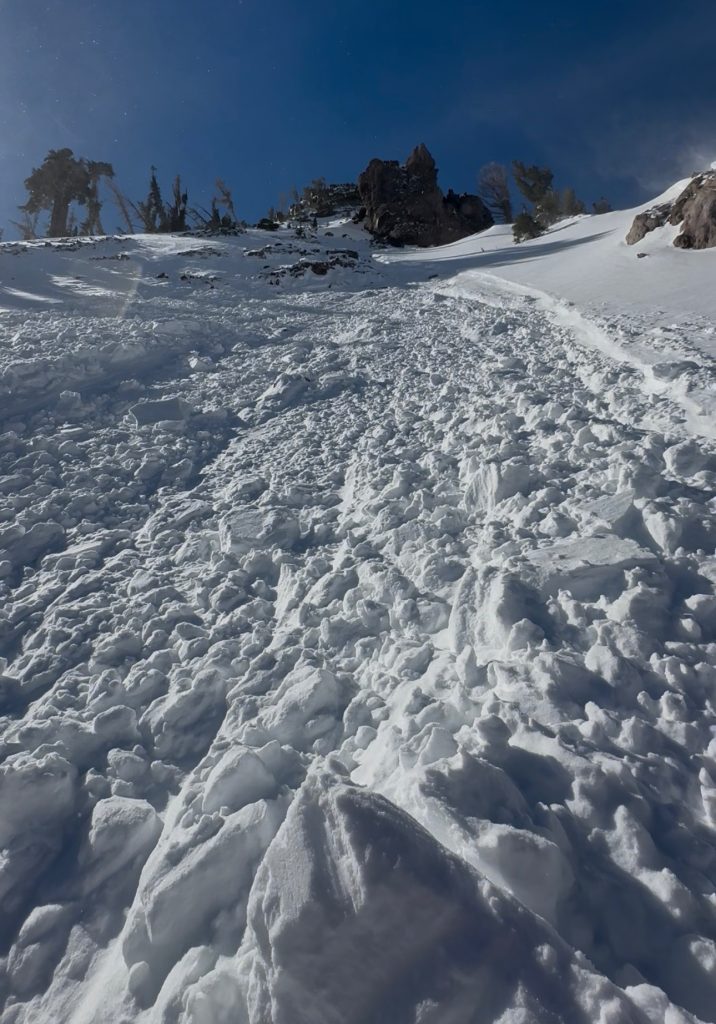
The center’s report lists the avalanche size as a D2, which is large enough to bury, kill and injure a person, according to Avalanche.org.
The avalanche summary notes that the information is provided “as is” and has not been reviewed for accuracy by Sierra Avalanche Center staff.
The center’s online map shows multiple avalanches occurring in the past week around the Tahoe Basin, including a particularly large cluster near Mount Rose in the vicinity of this skier’s incident.
Avalanche information published by the Sierra Avalanche Center on Nov. 13 and expiring Nov. 17 warns that backcountry travelers could trigger dangerous avalanches on northerly aspect slopes above about 8,000′-8,500′ due to the new snow load on top of weaker old snow.