
MTB Electronic Shifting Review – What’s the Point? Who Needs It?
Lots of folks out there live for the latest tech—first in line for new gadgets, chasing every trend. Me? Not so much. I’m the type who’d rather patch it up and keep it rolling than ditch it for something shiny and new. But… after upgrading my mountain bike, I had to make the leap to electronic shifting. At first, I was skeptical. Two years later? I’m not saying it’s flawless, but I gotta admit—I’m a believer now. Smooth, snappy, and surprisingly tough, it’s won me over on the trail.
The Verdict – Not A Gimmick
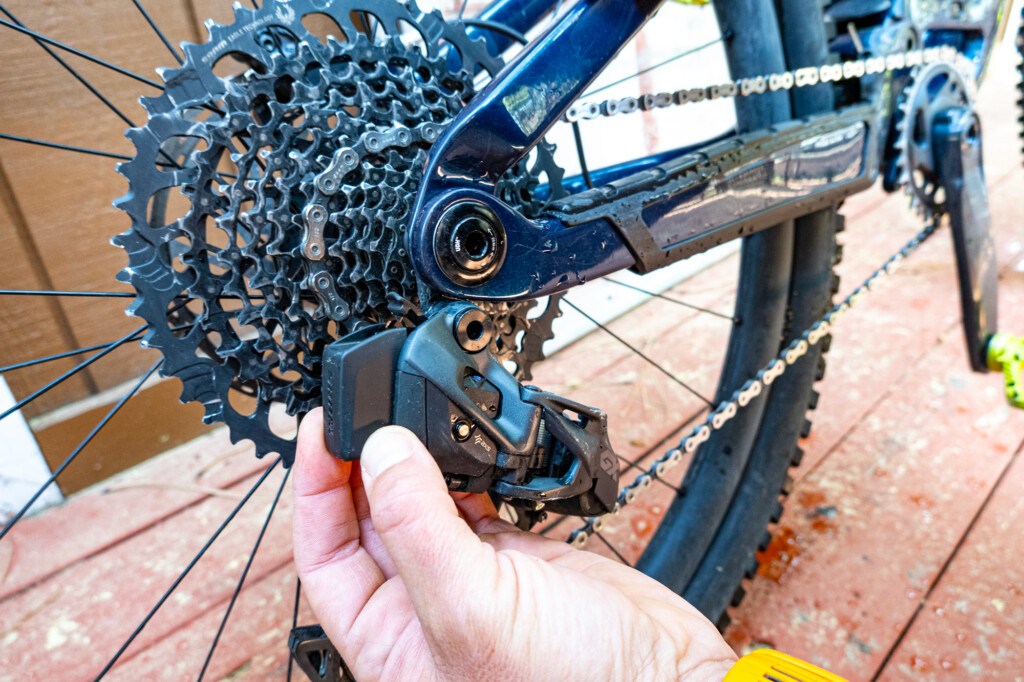
If you’re the kind of rider who’d rather spend more time in the saddle than wrenching on your bike, wireless electronic shifting is worth a serious look. I’ve been running the SRAM Eagle AXS, and while it’s not without quirks—like struggling a bit under extreme tension—it more than makes up for it with rugged reliability and buttery-smooth shifting.
One heads-up though: keep an eye on that battery indicator. If it dies mid-ride, you could find yourself stuck in the same gear miles from the trailhead. Keep reading on how we know. In fact, the best solution is to ALWAYS carry an extra battery.
Elephant in the Room – Battery Life
According to SRAM’s documentation, you should get around 25 hours of ride time per charge with their electronic shifting. When I first got the system, I fully charged the battery and rode it until it died. On that first run, I actually squeezed out about 40 hours before it finally gave out—leaving me stuck in one gear for the ride down. Not ideal.
Now that I’m riding 3–4 times a week, I keep a close eye on battery levels. As a rule of thumb, I give it a full charge once a month or right before any big ride, just to avoid having to think about it mid-ride.
Cold Weather Battery Tips for Electronic Shifting
In my second season using it, I noticed the battery life takes a serious hit in cold weather, especially below freezing. Leaving the battery connected while storing the bike in an unheated shed is a bad idea. I had a few nights where the battery completely died in the cold. The fix was simple, just disconnect it when storing the bike.
Electronic Shifting or Cable Shifting?
Honestly, it really comes down to the type of rider you are. Running out of battery is a real thing—I’ve heard plenty of stories from friends who’ve gotten stuck mid-ride. That said, you can avoid surprises by connecting your derailleur and shifter to the SRAM AXS app. While it’s not perfect, it does give you a decent sense of how much battery life is left.
On the flip side, mechanical (cable) shifters never need charging, but they do require more regular maintenance and adjustments.
So, what’s your preference—less maintenance with a battery to manage, or no battery but more tinkering? Personally, I’d rather keep an eye on the battery and spend more time riding, less time wrenching. But like all new products… there’s a high price tag that comes with it.
Who Should Upgrade
Honestly, when it comes to bang for your buck, there are plenty of other MTB essentials worth grabbing before splurging on electronic shifting—unless you’re like me and already deep in the maintenance rabbit hole. At that point, it might actually make more sense to just upgrade your whole rig and get electronic shifting with a new bike.
Editor’s note: This article originally appeared in the 2026 Tahoe Bike and Recreation Guide.