LAKE TAHOE, Nev. / Calif. – Fire has already struck in the high-elevation west after a winter that has fire experts holding their breath as seasons change.
At the end of March, the Dry Fork Fire hit the Uintah mountains in Utah at a similar elevation (7,000 feet) to the Tahoe Basin, where, “…typically this time of year,” Basil Newmerzhycky said in Great Basin Seasonal Outlook report, “fire would be unimaginable.”
That’s because these areas would typically be under several feet of snow, Newmerzhycky explains, but this year they’ve been bare already for quite some time.
“A bit of a canary in the coal mine,” Newmerzhycky added, “of what is possibly to come in the coming months.”
Here in the Tahoe Basin, North Lake Tahoe Fire District Division Chief Isaac Powning says we, too, can expect fire early this year.
“It is on all the fire agencies’ minds,” Powning said, “that fire season might be here sooner.”
Even after the recent storm, Lake Tahoe and Truckee Basin snowpacks have 22-27% of their typical snow water equivalent for this time of year.
“Anything below 70% is pretty eye-opening that there could be a more severe fire season in the higher elevations,” Newmerzhycky said.
A dry spell and record heat in March caused a record or near-record snowpack meltout, occurring one to two months earlier than normal.
-
Alert Wildfire Camera at Homewood last year on April 20, 2025.
Provided / Nevada Seismological Lab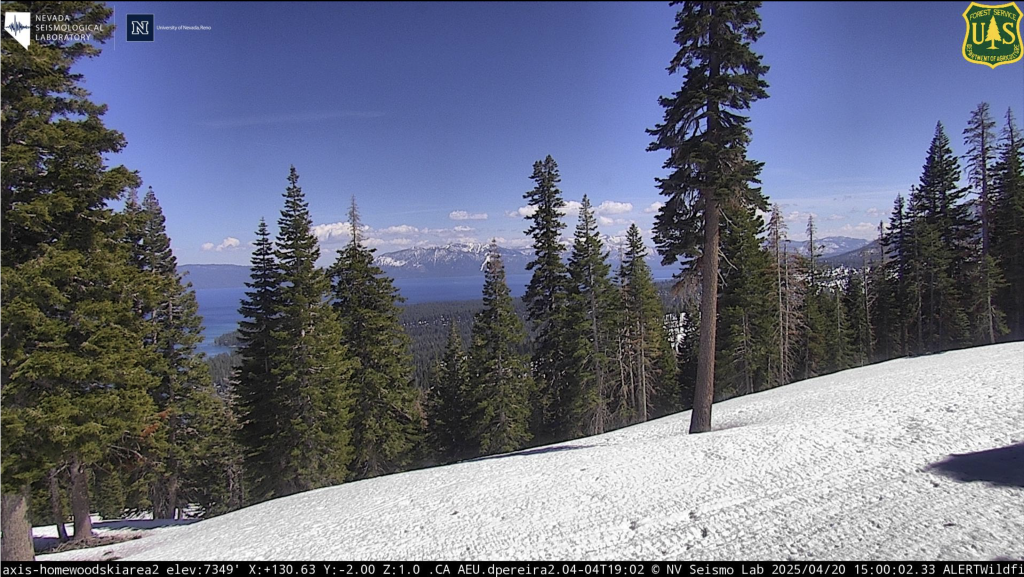
-
Provided / Nevada Seismological Lab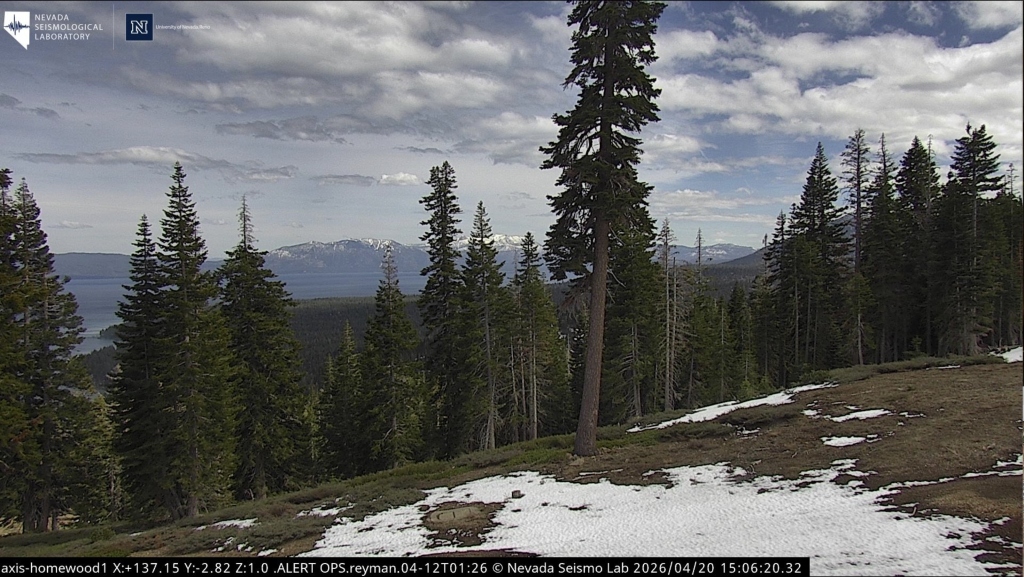
Despite a low snowpack, the area still received above-normal precipitation, marking what is called a “wet snow drought.” These occur when a significant amount of precipitation falls as rain rather than snow.
This has important implications for the vegetation that fuels fires due to grasses still receiving the moisture they need to grow into a heavy crop. Combined with the early melt-out, it spells ample time for that heavy crop of grasses to dry out and cure.
“Right now,” Powning explains, “they are a month or two in advance of what’s normal.”
Drier conditions also leave trees more vulnerable to beetles.
Although the recent April snowstorm brought some much needed moisture, Powning says, “As for changing my mind on the overall conditions, it didn’t do that.”
The silver lining to this type of winter is that it has allowed for more understory burning. However, it is a double-edged sword because it also means fire crews have been unable to conduct pile burning, which calls for more snow coverage.
With the expected early onslaught of wildfires, Powning says residents should undergo defensible space earlier than they are used to and review evacuation plans.
Fire restrictions are also likely to take effect much earlier this year, something to be aware of as a holiday weekend approaches at the end of May.
“There’s that big weekend of Memorial Day weekend, where maybe everybody’s used to not worrying about fire restrictions or fire dangers,” Powning says.
“Well, this might be a year where that’s a different story.”